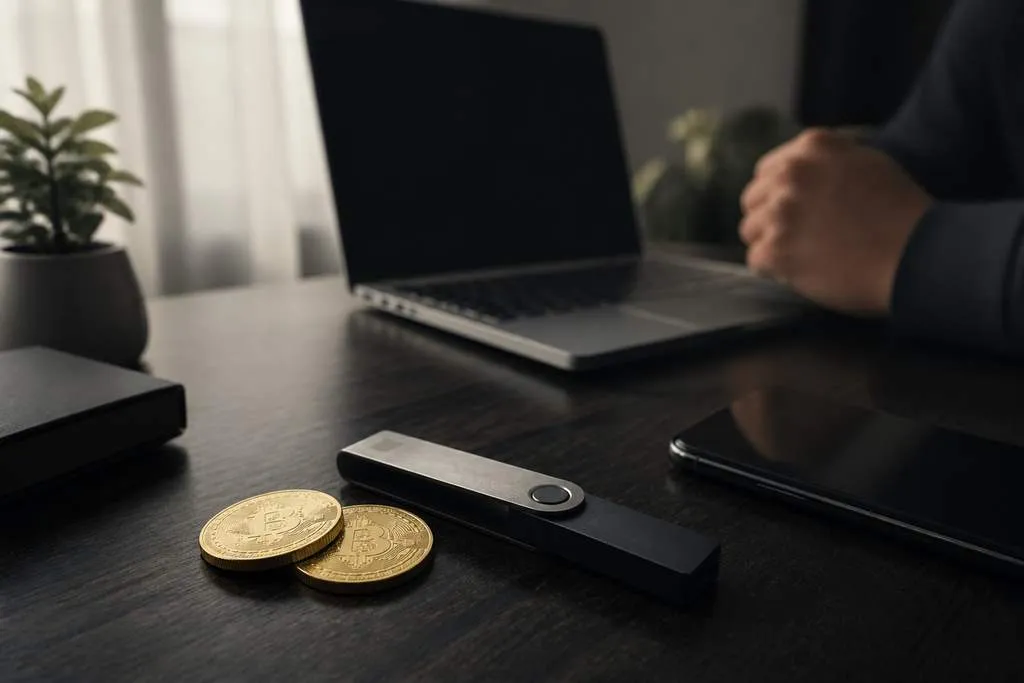
Many investors assume a Fidelity IRA works like a normal brokerage account with a crypto tab attached. That is the core misunderstanding behind the question: can you buy crypto in fidelity ira? In practice, the answer depends on what kind of Fidelity IRA you mean, what asset you want, and whether you are buying directly or getting exposure through a different wrapper.
The confusion is understandable because retirement accounts and crypto are often discussed in the same breath, but they are not governed by the same product rules. A Fidelity IRA can hold traditional retirement assets, and Fidelity also gives some customers access to crypto-related products outside the IRA itself. Those are different paths, and mixing them up leads to bad assumptions about what can actually be purchased inside the tax-advantaged account.
Why the question can you buy crypto in fidelity ira gets answered wrong
The most common mistake is treating “Fidelity” as one single platform with one universal menu. It is not. Fidelity offers brokerage services, retirement accounts, and access to certain digital-asset-related products, but not every account type can buy every product. An IRA is a tax structure first and an investment container second, so the asset list inside it is narrower than many people expect.
Another mistake is assuming that if a provider offers crypto anywhere, it must be available inside the IRA. That is rarely how retirement platforms work. Custody, tax reporting, trading permissions, and account eligibility all matter. Even when a customer can access bitcoin-related exposure on a brokerage platform, that does not mean the same exposure is allowed within an IRA.
What a Fidelity IRA usually can hold instead of direct coins
Inside a typical IRA, the holdings are usually conventional securities rather than direct cryptocurrency. That generally means stocks, bonds, mutual funds, ETFs, and cash positions, depending on the account type and features available. For investors who want retirement savings and digital-asset exposure in the same broader portfolio, the common route is not direct coin ownership inside the IRA.
Exposure can sometimes come through instruments that track or relate to crypto, if they are permitted by the brokerage or retirement platform. The key distinction is ownership of the asset itself versus exposure to its price movement. Those are not the same from a custody or tax-reporting perspective, and retirement-account providers tend to draw that line carefully.
If the goal is to understand the practical options, the distinction looks like this:
| Approach | What is held | Typical IRA fit |
|---|---|---|
| Direct crypto | Bitcoin, ether, other coins | Usually not standard in a Fidelity IRA |
| Crypto-linked fund or trust | Security tracking digital assets | Depends on account permissions |
| Traditional IRA assets | Stocks, bonds, funds | Standard fit |
The table captures the real issue: the retirement account is designed around securities and tax treatment, not open-ended token custody. That is why so many “can I buy crypto there?” answers start and stop too early.
For readers tracking how the market and product side of this issue keeps shifting, the coverage at can you buy crypto in fidelity ira can help frame the broader context without assuming every account supports the same assets.
Why direct custody is the line Fidelity generally does not cross
Retirement accounts introduce operational and compliance constraints that spot crypto purchases do not. A provider has to manage recordkeeping, permitted investments, beneficiary handling, and distribution rules. Adding direct coin custody means dealing with wallet management, chain-specific transfers, transfer failures, and the added burden of safeguarding private keys or working through a custodian that specializes in them.
That is why many mainstream IRA providers stop at traditional securities or approved crypto-related products. They can offer broad retirement infrastructure without having to become a digital-asset custodian in the full sense. The question is not whether crypto exists on the platform; it is whether the account structure is built to hold it directly.
Investors also sometimes miss the tax angle. An IRA already gives tax treatment that can be valuable, and direct crypto inside an IRA does not erase the need to follow retirement-account rules. The account wrapper matters as much as the asset. If the asset cannot be cleanly administered under IRA rules, it will usually be excluded even if the provider is otherwise crypto-aware.
How to tell whether a product is actually available in your account
The cleanest check is not a blog post or a forum thread. It is the trade ticket, the account’s eligible-investment list, and the provider’s own account documentation. If an asset cannot be selected in the IRA trade flow, it is not available in that account, even if it exists somewhere else on the platform.
Availability can also vary by account subtype and jurisdiction. Retirement-account rules differ by country, and product access can be limited by local regulation, entity structure, and client residency. The answer for one customer in one region may not apply to another customer elsewhere, which is another reason the simplified version of the question is often misleading.
Some investors look for a shortcut by asking whether they can move coins into an IRA after buying them elsewhere. That is a separate issue from buying inside the account, and it usually involves different custodial arrangements, more paperwork, and different eligibility standards. The mechanics matter because retirement accounts do not generally work like a simple wallet transfer.
Common myths about Fidelity and crypto inside IRAs
One myth says that if a platform offers a bitcoin-related product, an IRA can automatically buy it. That is false. Account permissions and product eligibility are separate layers.
Another myth says that direct crypto inside an IRA is just a matter of requesting it from support. In most cases, support cannot override product design. If the account is not set up for that asset class, the request does not create availability.
A third myth says that retirement accounts are less flexible only because firms are being conservative. Regulation and custody are part of the answer, but so are recordkeeping and distribution mechanics. A provider can support ordinary securities with well-established workflows; direct token custody changes the operational burden materially.
There is also a mistaken belief that crypto exposure inside an IRA must mean speculation. In reality, many investors who ask the question are looking for controlled exposure, tax deferral, and cleaner estate handling rather than aggressive trading. The product issue is not about attitude toward crypto; it is about what the account can legally and operationally hold.
What a practical retirement investor should do next
The most useful next step is to decide whether the real goal is direct ownership or portfolio exposure. If direct ownership is the priority, a Fidelity IRA may not be the right tool. If the priority is retirement-account exposure to the asset class, an approved crypto-linked instrument may be enough, provided it is eligible in the specific account.
That distinction gives a concrete decision path. Check the IRA’s eligible investments, confirm the account subtype, and verify the rules for your country or residency before assuming any crypto purchase is allowed. In other words, can you buy crypto in fidelity ira is the wrong question unless it is paired with which Fidelity IRA, which product, and which jurisdiction.