Buying crypto in the UK is usually simpler than many first-time buyers expect, but that simplicity hides a few traps. The biggest mistakes come from assuming every app is the same, that bank transfers are always instant, or that registration and identity checks are optional. In practice, the safest route is usually the most boring one: a UK-registered platform, a bank transfer, and a clear plan for where the assets will live after purchase.
Another common myth is that buying crypto in the UK is some kind of legal grey area. It is not. UK users can buy crypto through regulated businesses, but the market does not work like a protected savings product. There is no Financial Services Compensation Scheme cover for a price drop, and not every provider gives the same level of custody, fraud protection, or withdrawal control. That distinction matters more than most beginners realise.
How can i buy crypto in uk without confusing access with safety
Most people start by asking which app is easiest, but the better question is which route gives proper control over deposits, trading, and withdrawals. A polished interface does not tell you whether the firm uses standard payment rails, how it handles account recovery, or whether withdrawals can be paused for compliance reviews. The first myth to drop is that a large user base automatically means a safer choice.
In the UK, buying crypto generally means opening an account with a platform that accepts local customers, completing identity checks, funding the account, and placing an order. The exact sequence varies, but the core mechanics are the same. The main risk is not the purchase itself; it is choosing a provider based on advertising, then discovering that card fees are high, withdrawals are awkward, or support is slow when something goes wrong.
For readers tracking market-structure and venue changes, the best context often sits alongside broader trading coverage, such as how can i buy crypto in uk, because access to an asset is shaped by exchange operations as much as by the asset itself. That matters when a platform changes payment options, token listings, or verification steps.
UK buyers usually need verification before they can trade
Another mistaken belief is that crypto can be bought anonymously in a normal consumer setting. Most UK-facing platforms require identity verification because they must comply with anti-money-laundering and fraud controls. That usually means a photo ID, proof of address, and sometimes extra checks if activity looks unusual or if account funding comes from a new payment method.
People sometimes see verification as a barrier invented by exchanges. In reality, it is part of how regulated platforms manage risk and link a payment source to a named account holder. This is why opening an account can take longer than buying shares through a familiar app. The delay is often not a technical failure; it is a compliance step that protects the platform and limits fraud.
It also explains why “instant buy” does not always mean instant access. A card purchase may be faster at checkout, but the platform can still hold withdrawals or request more checks before allowing large transfers out. A bank transfer is usually slower to start, yet it often gives a cleaner transaction record and fewer payment reversals.
Payment method myths shape most bad first purchases
Buyers often assume the cheapest method is whichever one feels fastest. That is rarely true. Card payments can be convenient, but the provider or card issuer may treat them differently from ordinary retail spending. Bank transfers are generally better for larger, planned purchases because they are easier to reconcile and less likely to trigger payment friction. Open banking can sit between the two, depending on the platform and bank.
The real tradeoff is not speed versus delay; it is convenience versus control. A quick card purchase may look simple until you notice higher costs or stricter limits. A bank transfer may take a little longer, but it often reduces avoidable errors, especially for first purchases. UK buyers who plan to move funds off-platform should also consider whether the exchange supports straightforward withdrawals to a wallet address they control.
| Method | Main strength | Main drawback |
|---|---|---|
| Bank transfer | Clear records | Not always instant |
| Debit card | Fast checkout | Possible extra fees |
| Open banking | Direct bank approval | Bank compatibility varies |
| E-wallets | Convenient for some users | Support is inconsistent |
Why the cheapest-looking platform can cost more later
Many first-time buyers focus on the trading fee and ignore the rest. That creates a false comparison. A platform with low headline fees can still be expensive once spreads, deposit charges, withdrawal fees, and conversion costs are included. Some providers also make the order flow look simple while quietly widening prices during volatile periods.
This is why “lowest fee” is not a complete buying strategy. The better test is whether the platform shows the full cost before you confirm the order and whether you can withdraw without paying a surprise penalty. If the business makes it hard to move assets away, that is a sign the account is being designed around retention rather than user control.
Crypto buyers in the UK also need to remember that tax treatment is separate from trading convenience. A purchase is not usually the taxable event that matters most; disposals, swaps, and other asset movements can create records that need to be tracked. Anyone making repeated buys should keep dates, amounts, and wallet destinations from the start rather than trying to reconstruct them later.
Where people go wrong after the purchase is complete
The next myth is that owning crypto inside an exchange account is the same as holding it directly. It is not. An exchange balance means the platform controls custody records, even if the account statement shows an asset balance in your name. That is useful for simple trading, but it is a poor substitute for understanding what happens if the platform freezes withdrawals, fails, or changes terms.
Self-custody is the alternative, but it carries its own responsibilities. If a user sends coins to the wrong address, loses recovery details, or ignores network selection, there is usually no customer support fix. This is why beginners should think beyond the purchase screen and ask where the asset will be held after the trade settles. Buying is only one part of ownership.
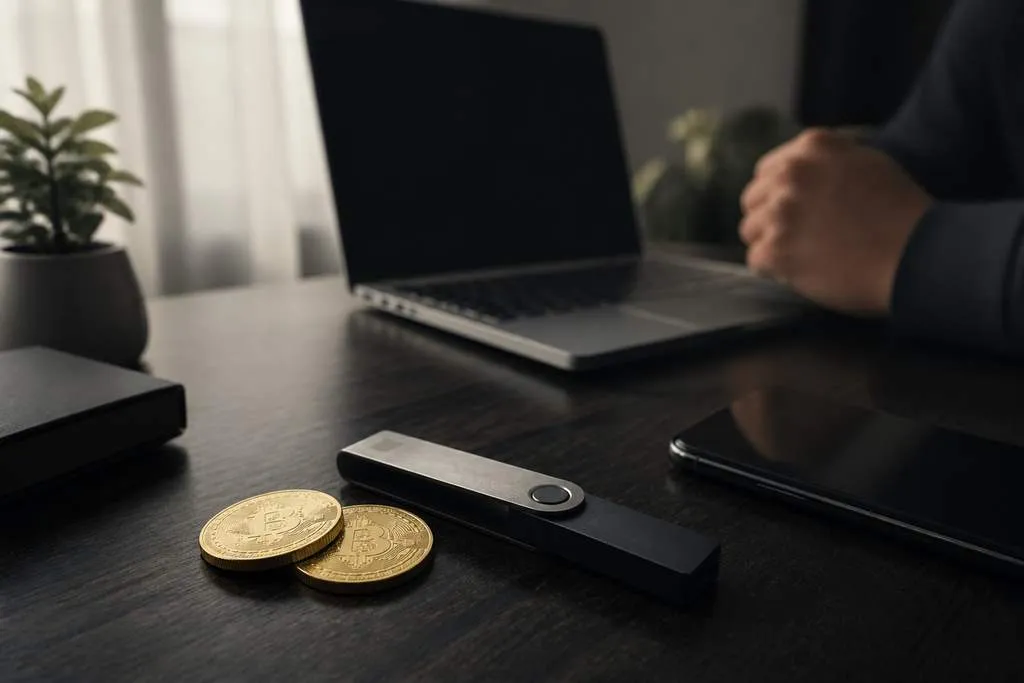
Hardware wallets, software wallets, and exchange accounts all solve different problems. Exchange custody is easiest for active trading. Software wallets give direct control but depend on device security. Hardware wallets reduce online exposure but require careful backup and more disciplined use. The right choice depends on how often the asset will move, not on which option sounds most advanced.
UK rules matter, but not in the way beginners assume
Some buyers think regulation means every platform is equally protected. That is a mistake. UK rules can improve transparency, identity checks, and complaint handling, yet they do not eliminate market risk or guarantee a provider’s financial strength. A regulated registration or authorisation status is worth checking, but it should be treated as a baseline, not a seal of perfection.
Another misunderstanding is that the UK market is closed to anyone without technical knowledge. In reality, the process is designed to be accessible, but the user still has to pay attention to account details, network choice, and transfer destination. The system is simple enough for most adults to use, which is exactly why careless mistakes can be costly.
Buying crypto in the UK also becomes easier when the buyer treats the platform like a financial service rather than a social app. That means reading withdrawal rules, checking supported assets, understanding when balances are held versus when they can be moved, and testing with a small transfer before committing more money.
The practical takeaway for a first UK crypto purchase
The best first purchase is usually the one that prioritises clarity over novelty. Open an account with a provider that serves UK customers, complete verification, fund it with a method you can trace easily, and make a small purchase before scaling up. Then move the asset only if you understand the destination wallet and the network being used.
That approach avoids most of the myths around buying crypto in the UK: it is not about finding a secret loophole, it is not about chasing the cheapest headline fee, and it is not about assuming the platform will fix every mistake. It is about choosing a clean route, checking the details, and keeping control of the asset after the trade.