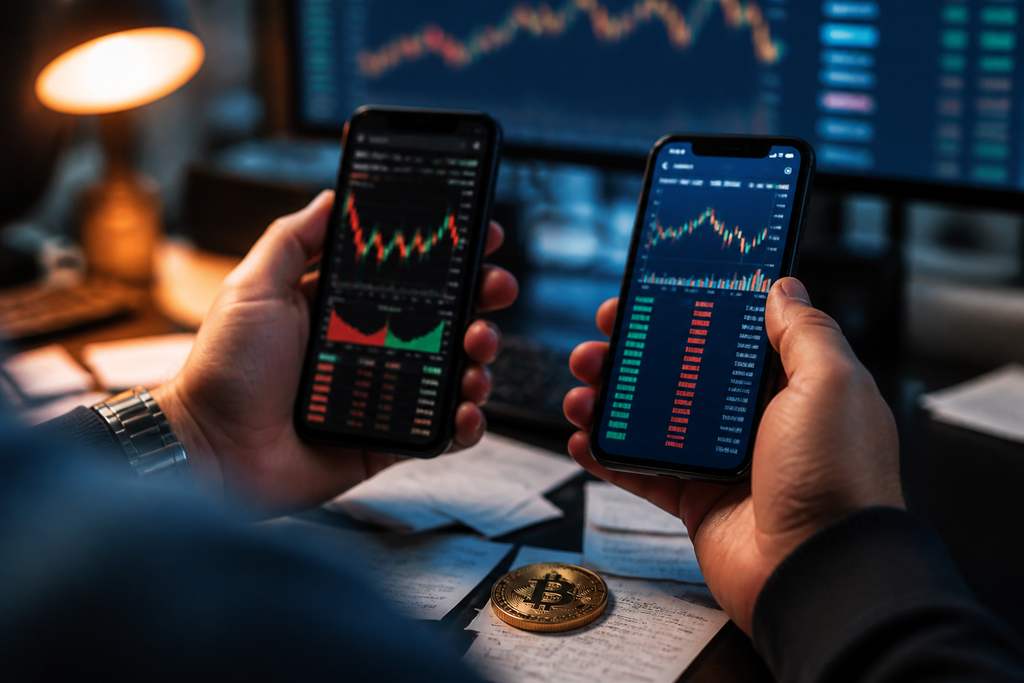

Buying 1inch looks simple on the surface: pick an exchange, place an order, and move the token to a wallet if needed. The real cost is less obvious. The headline price is only one part of what you pay, because spreads, trading fees, network fees, and withdrawal charges can all change the final amount of 1INCH you receive.
That matters even more for buyers who care about execution quality rather than just getting in quickly. A low-fee platform can still be expensive if the quoted price is poor, while a higher-fee venue can be cheaper overall if it offers tighter pricing or better on-chain routing. The useful question is not only how to buy 1 inch crypto, but how to buy it with the fewest avoidable costs.
How to buy 1 inch crypto without missing the hidden costs
The basic process starts with choosing where the trade happens. Most buyers use a centralized exchange, because it is the simplest route for fiat deposits and card purchases. Others prefer a wallet-based swap through a decentralized exchange or aggregation route, especially if they already hold crypto and want to stay on-chain. Each path has a different fee profile, and the cheapest option depends on whether you are buying with cash, stablecoins, or another token.
Before any order is placed, check three price layers. First is the platform fee, which may be a maker-taker trading charge or a flat purchase fee on instant-buy screens. Second is the spread, which is the gap between the buy and sell quote you see. Third is the network cost if you move the token off the platform. A buyer who ignores one of these layers can end up paying more than expected even when the posted fee looks low.
Centralized exchange costs and what they usually include
Centralized exchanges are often the most straightforward choice for a first purchase. They usually support bank transfers, cards, and in-platform trading pairs, but the pricing differs by payment method. Card purchases are commonly the most expensive because the exchange may charge a premium for instant settlement, while bank deposits followed by a spot trade tend to be cheaper.
Spot markets also give more control than one-click buy screens. A limit order can reduce slippage if the market moves while the order is being matched, though it may not fill immediately. A market order fills right away but may pay a worse price if liquidity is thin. For a token like 1INCH, the difference is usually small on liquid venues, yet it still matters for larger orders.
Some traders compare exchange pricing with on-chain sourcing, and the difference is often clearer when the details are laid out side by side. The table below shows the main cost drivers in the most common purchase routes.
| Purchase route | Main cost components | Typical cost pressure |
|---|---|---|
| Card buy on exchange | Purchase fee, spread | Often highest |
| Bank transfer to spot trade | Deposit fee, trading fee, spread | Usually lower |
| Wallet swap on-chain | DEX fee, gas, price impact | Depends on network activity |
| Exchange withdrawal after purchase | Withdrawal fee, gas | Varies by chain |
Network fees, withdrawal charges, and why custody changes the bill
The token’s final cost changes again when custody enters the picture. Leaving 1INCH on an exchange avoids immediate withdrawal fees, but it means the asset stays under the platform’s control. Moving it to a self-custody wallet adds a withdrawal charge and possibly a network fee, depending on the chain and the exchange’s policy. If the goal is long-term holding, that extra step may still be worth it; if the goal is a short-term trade, it can be unnecessary friction.
On-chain fees are not constant. They depend on which network the token is moved on and how busy that network is at the time. Ethereum-based transfers can become expensive during periods of heavy activity, while cheaper networks or layer-2 routes may lower the bill if the exchange and wallet support them. The key point is that the withdrawal screen often matters as much as the trading screen.
Custody also affects future costs. Keeping tokens in a wallet makes later transfers and swaps fully on-chain, so every action can carry gas charges. By contrast, keeping the balance on an exchange may reduce immediate spending but exposes the user to platform risk and future withdrawal fees. The cheapest path in the moment is not always the cheapest path over the full holding period.
Using a wallet swap when the token is already on-chain
A wallet swap can be efficient for buyers who already hold crypto and do not need fiat rails. In that case, the cost is usually made up of protocol fee, liquidity spread, and gas. Aggregators may search multiple sources for the best route, which can improve execution compared with swapping on a single venue. That convenience comes with a tradeoff: the quoted output can change quickly if market conditions move before the transaction confirms.
For this reason, a wallet-based purchase should be judged by the final received amount rather than the banner fee. A route with a low protocol fee can still be expensive if it uses a poor pool or if gas is high at the moment of execution. The best comparison is the amount of 1INCH in the wallet after all deductions, not the fee line alone.
For readers tracking market access and fee pressure across venues, the broader coverage at how to buy 1 inch crypto often helps frame where spreads and liquidity are improving, which can matter as much as the posted commission. That context is useful when deciding whether to buy through a broker-style interface or an on-chain route.
Fiat purchase methods and the cost gap between them
Payment method is one of the biggest drivers of total cost. Bank transfer usually wins on price because it is slower and gives the exchange a cleaner settlement path. Card payments are faster and easier, but they tend to carry higher fees and wider spreads. Some platforms also treat instant purchases as a convenience product, which means the displayed price can include a markup beyond the explicit fee.
The practical difference is simple: if speed matters, pay more; if cost matters, accept a slower funding method. Buyers who plan ahead can often reduce expenses by funding the account first, waiting for the deposit to settle, and then placing a spot order. That sequence removes the most expensive parts of the purchase chain for many users.
What to check before pressing buy
A careful buyer looks at the full route, not just the token price. The first check is whether the platform quotes the trade in a deep market or through a thin pair that may move the price. The second is whether the order type gives control over slippage. The third is whether the asset should stay on the venue or be withdrawn immediately.
It also helps to compare the same purchase size across methods. Small buys can be disproportionately affected by fixed withdrawal costs, while larger buys are more exposed to spread and price impact. A route that looks cheap for a small test purchase may become less efficient as size grows, especially if the market depth is limited.
Tax treatment can also change the practical cost, although that depends on jurisdiction and personal circumstances. A spot purchase, a swap, and a transfer between wallets are not always treated the same way, so record-keeping matters from the start. Clean transaction history is part of the cost of buying responsibly, because missing records can become expensive later.
A cost-first way to buy 1INCH that keeps the bill under control
The most economical approach is usually to fund an exchange by bank transfer, trade on a spot market, and withdraw only if self-custody is needed. That sequence tends to reduce payment premiums, avoid unnecessary spread, and keep network charges under control. If the buyer already holds crypto, an aggregator-based wallet swap can be competitive, but only when gas and route quality are favorable.
The concrete takeaway is to compare the total received amount, not the advertised fee. Check payment method, spread, trading commission, withdrawal cost, and network conditions before buying. That simple checklist gives a better answer than any single price tag and makes the process of buying 1INCH far less expensive than a rushed purchase.