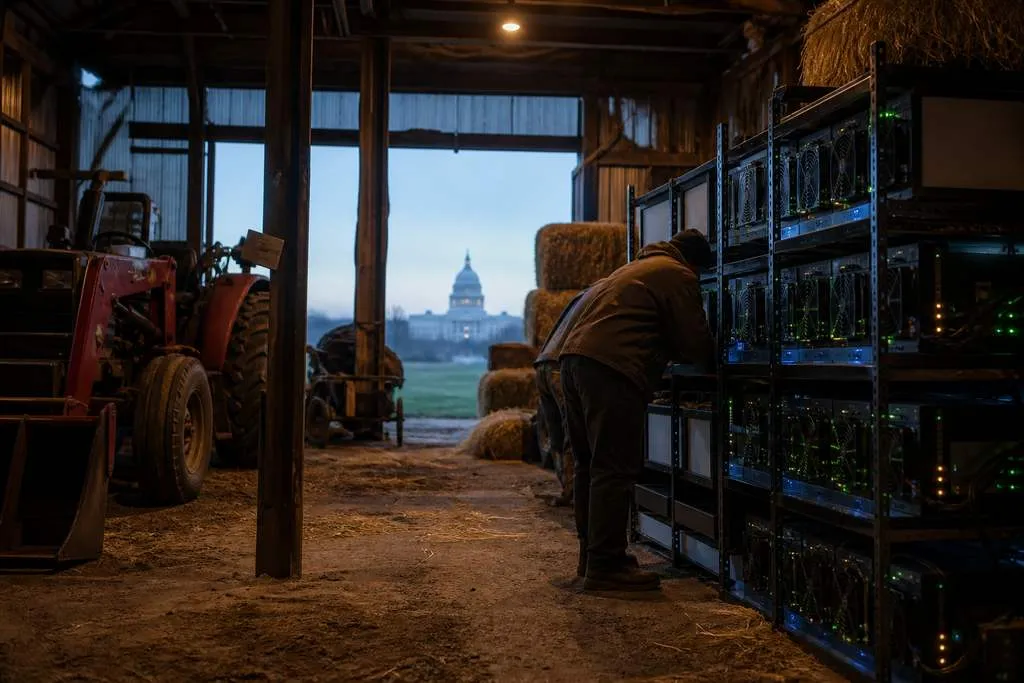
Many people talk about “farming” bitcoin as if it were the same as planting a crop or earning passive rewards from a finance app. That framing causes most of the confusion. Bitcoin does not have a farming feature in the way some crypto projects advertise “yield farming.” What people usually mean is bitcoin mining: computers compete in a public bookkeeping race to add the next block of transactions, and the winner earns the block reward under the network’s rules.
Once the process is described that way, the legal question becomes clearer. The core act is running specialized hardware, consuming electricity, and participating in a decentralized protocol that records transactions. In many places that activity is legal. The harder issues are local: power theft, zoning, noise, licensing, taxes, sanctions compliance, and whether a government has broader restrictions on crypto activity. The biggest myth is that bitcoin mining is automatically illegal everywhere. The second biggest myth is that legality is the only real barrier.
Why “is farming bitcoin illegal” starts with a terminology mistake
Bitcoin itself is secured through proof of work mining, not farming. The network asks miners to package recent transactions into a block and repeatedly hash block data until one miner finds a valid result under the current difficulty target. That contest is what keeps the ledger hard to rewrite. Calling it “farming” blurs the difference between mining and other crypto activities such as staking or yield farming, which involve very different legal and technical structures.
This matters because laws often attach to the actual activity, not the slang around it. A regulator looking at a bitcoin miner is not usually asking whether someone is “farming.” They are looking at business registration, electrical use, imports of equipment, tax treatment of mined coins, environmental permits where relevant, and whether the operator is violating any local prohibitions on digital asset businesses. A homeowner with one machine and an industrial warehouse full of ASICs may face very different legal obligations even if both say they are “farming bitcoin.”
When bitcoin mining is legal, and when it crosses a line
In many jurisdictions, mining bitcoin is lawful if the operator follows ordinary rules. Those rules can include paying for electricity, complying with building and fire codes, respecting lease terms, declaring business income where required, and reporting taxes when mined bitcoin is sold or exchanged. Mining hardware itself is generally legal to own unless a country restricts such imports or bans crypto-related operations outright.
The activity crosses into illegality through surrounding conduct more often than through the protocol itself. Stealing electricity is illegal whether the power is used for lights or ASIC miners. Running a loud, heat-heavy mining setup in violation of local zoning or landlord rules can trigger enforcement. Using mined bitcoin to evade sanctions, launder proceeds, or conceal taxable income creates separate legal exposure. In some places, governments have imposed temporary or permanent restrictions on mining because of energy policy, capital controls, or broader bans on crypto businesses. That is why no honest article can say mining is simply legal or illegal everywhere.
The bookkeeping race behind bitcoin mining
The accounting-race analogy helps cut through the myths. Imagine a global ledger that anyone can inspect but no central clerk controls. Miners act like rival bookkeepers competing for the right to write the next page. To win, each miner must show proof of computational work by finding a valid hash. Other nodes verify the result quickly. If the block follows consensus rules, the chain advances and the winning miner receives newly issued bitcoin plus transaction fees.
That mechanism explains why participation is expensive and why home enthusiasts often underestimate the setup. Mining does not mean installing an app on a laptop. Competitive bitcoin mining uses ASICs, machines designed for one task. They draw substantial power, create constant fan noise, and produce a lot of heat. Operators also need reliable power delivery, internet connectivity, physical security, and some plan for ventilation or cooling. The law may permit mining while economics quietly rule it out.
What people miss about participating in bitcoin mining
Another common mistake is assuming participation only has one form. At one end, someone may run a single machine at home, mainly to learn how the network works. At the other, a company may operate a facility with racks of ASICs and negotiated power arrangements. Between those extremes are hosted mining arrangements, where a third party houses the machines, and mining pools, where many miners combine hashpower and share rewards according to pool rules.
Mining pools are especially important to understand. A solo miner can work for a long time without finding a block, because success is probabilistic. Pools smooth that variance by distributing smaller, more regular payouts when the pool finds blocks. Legally, joining a pool is usually less about a special category of law and more about counterparty risk and compliance. The pool’s terms, payout reporting, custody practices, and jurisdiction can matter almost as much as the hardware. A pool can fail operationally, hold payouts, or restrict users from certain countries even if mining itself is lawful where the user lives.
Costs and practical limits matter more than the phrase “is farming bitcoin illegal”
For most newcomers, legality is only the first filter. The practical barriers arrive fast. Electricity is the obvious one, but not the only one. Residential power rates may be too high. Some homes do not have circuits suited for multiple high-draw machines. The noise can resemble industrial equipment rather than consumer electronics. Heat management is not optional; unmanaged heat shortens hardware life and can create safety issues.
There is also the operational reality of hardware aging. ASICs compete in a network where total hashpower and difficulty change over time. A machine that seems adequate at purchase may become relatively weak as newer models arrive or as network conditions shift. Repair, downtime, firmware management, fan failure, dust control, and shipping delays all affect results. None of this makes mining illegal, but it does make the popular image of easy at-home “bitcoin farming” misleading.
Taxes, reporting, and energy rules are where legal risk often appears
People often search for a yes-or-no answer and miss the compliance details that generate actual legal problems. In many tax systems, mined bitcoin may be treated as income when received, with later capital gain or loss issues when disposed of. Recordkeeping matters because the operator may need timestamps, fair market value at receipt under local rules, equipment expense records, and electricity or hosting invoices if deductions are available. Failing to keep records creates trouble long before any debate about the nature of mining.
Energy and property rules are another source of risk. Utilities may prohibit certain high-load commercial uses on residential plans. Landlords may ban alterations, excessive electrical draw, or round-the-clock industrial noise. Some municipalities care about ventilation, fire suppression, or transformer stress when larger operations appear. If a jurisdiction has targeted mining specifically, the rule may come through environmental permitting, registration requirements, or a direct ban on mining facilities. The legal status depends on those concrete rules, not on headlines alone.
A sensible takeaway before starting bitcoin mining
If someone asks whether bitcoin “farming” is illegal, the most accurate answer is that bitcoin mining is often legal, but legality depends on local law and on how the operation is run. The useful next step is not chasing slogans. It is checking four things in order: whether crypto mining is permitted in the country or state, whether the property and utility arrangement allows the load, what tax reporting will be required, and whether the planned setup is realistic given noise, heat, and maintenance.
For a small-scale beginner, the concrete takeaway is simple: learn the mining process first, price the power honestly, and verify local rules before buying hardware. If any of those three checks is weak, the project is not ready. That approach clears away the myth that the main issue is a hidden global ban, and replaces it with the real question: whether a specific mining setup can be run lawfully and sensibly in a specific place.