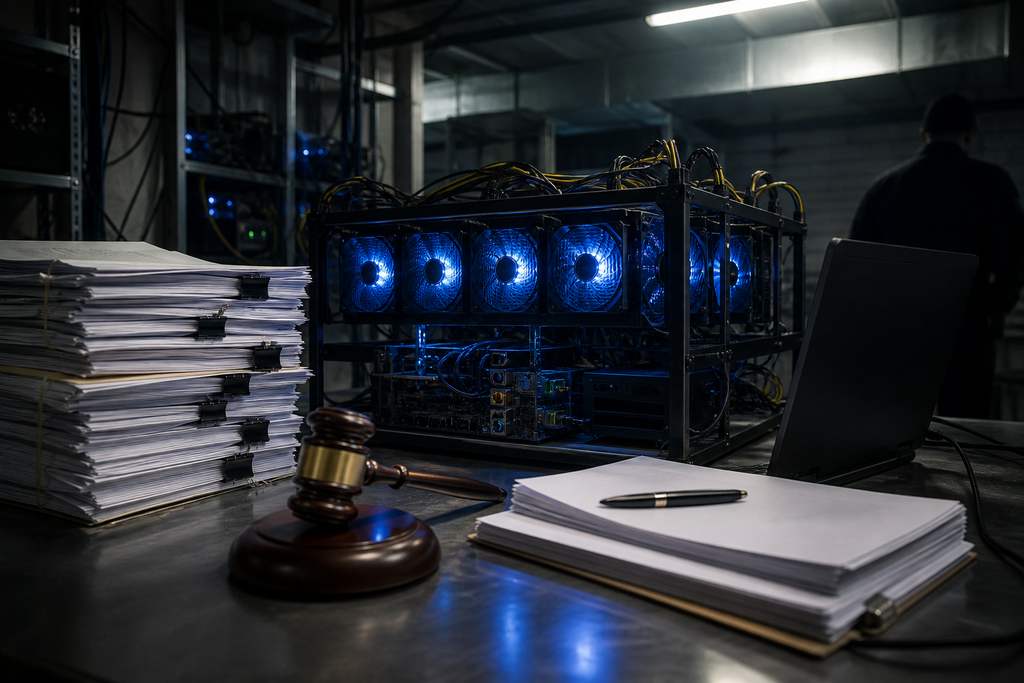
Bitcoin mining is often described as a digital gold rush, but a better starting point is a bookkeeping race. Miners compete to package recent transactions into a block and win the right to add that block to Bitcoin’s public ledger. They do this by running specialized machines that repeatedly guess a valid hash under Bitcoin’s proof-of-work rules. The network accepts the winning block, other nodes verify it, and the ledger moves forward. That basic mechanism matters because many legal misunderstandings come from confusing mining with printing money, hacking, or running an unregistered financial service.
The short answer is that mining Bitcoin is not automatically illegal everywhere, but legality depends on where the machines are located, how electricity is obtained, how the operation is structured, and whether local permits or business rules apply. That is why the better question is not only “is it illegal to mine bitcoin” or “is it illegal to mine bitcoins,” but also what people do around mining that creates legal risk. The biggest mistakes usually involve power theft, zoning violations, noise complaints, tax neglect, and assuming that if the Bitcoin network is global, local law does not matter.
When is it illegal to mine bitcoin in practice
In many places, simply running mining hardware is not itself banned. Mining is just participation in a decentralized network by performing computations and broadcasting valid blocks. The legal trouble starts when a miner breaks some other rule while doing it. If a jurisdiction prohibits cryptocurrency mining directly, then the activity can be unlawful on that basis alone. More often, authorities act through existing rules on energy use, land use, environmental controls, taxation, customs, or licensing.
That is why broad online claims are unreliable. One person may say mining is legal because they run a few machines in a warehouse under a compliant industrial tariff. Another may say it is illegal because their city shut down a home setup after repeated complaints and an inspection found unsafe wiring. Both stories can be true because the facts differ. A lawful result depends less on Bitcoin’s code than on ordinary local regulation.
The first common mistake is treating mining like passive home computing
Mining no longer looks like leaving a laptop on overnight. Competitive mining uses ASICs, which are purpose-built devices that draw substantial power and produce heat and fan noise. New operators often underestimate how different this is from regular household electronics. They plug multiple units into a garage or apartment circuit, overload outlets, ignore ventilation, and assume the worst outcome is a high utility bill. In reality, fire code, electrical code, lease terms, and utility rules may all be implicated.
Avoiding this mistake starts with classifying the setup correctly. A single experimental machine may still trigger lease restrictions, HOA rules, or utility concerns if the noise is obvious or the load profile is unusual. Larger installations can require an electrician, upgraded panels, fire suppression measures, or a permitted commercial site. The legal issue is often not “Bitcoin” but unauthorized electrical modification or unsafe occupancy use. People who treat mining as a hobby but operate at a commercial intensity create avoidable risk.
Electricity theft and tariff abuse create the clearest legal exposure
The most direct way mining becomes illegal is through unlawful power use. Bypassing meters, tampering with utility equipment, running extension lines from common areas, or using an employer’s electricity without permission can lead to theft allegations. Even where a criminal case does not follow, a utility can disconnect service, bill retroactive charges, or pursue civil remedies. Because mining economics depend heavily on energy, some operators convince themselves that “borrowed” electricity is a technical shortcut. Legally, it is often the opposite: the easiest path to enforcement.
Less obvious but still serious is tariff abuse. Utilities commonly separate residential, commercial, and industrial service classes. A miner who applies for one category while operating like another can face disputes over breach of contract or misrepresentation. The same problem appears in buildings where the rent includes electricity. If the contract assumed ordinary residential use, a landlord may argue that mining falls outside the agreed use and seek eviction or damages. Reading the service agreement matters more than many beginners expect.
Zoning, noise, and heat are where small operations get noticed
Mining hardware has a physical footprint. Fans create a steady high-frequency noise, and the machines expel significant heat. In detached industrial space, those effects may be manageable. In apartments, mixed-use buildings, or suburban homes, they can become the reason officials or landlords start asking questions. Local law may limit home-based business activity, impose nuisance standards, or regulate external ventilation changes.
A common mistake is assuming that if no one sees the machines, the setup is invisible. In practice, neighbors hear it, property managers notice unusual heat, and utilities flag abnormal load patterns. Once that happens, the discussion quickly shifts from cryptocurrency to occupancy rules and nuisance complaints. The safest approach is to choose a location where power, cooling, and noise control match the intended scale. If the operation needs ducting, panel work, or structural changes, get those approved first rather than explaining them after a complaint.
Mining pools, hosted mining, and business structure change the analysis
Not every miner runs a standalone operation. Many contribute hash power to a mining pool, which coordinates participants and distributes rewards according to its rules. Others pay a hosting provider to place their machines in a facility with power and cooling. These models can reduce practical burdens, but they do not remove legal responsibilities. A miner still needs to understand who controls the hardware, which country the machines are in, how custody works, and what contract governs payouts and downtime.
Another frequent mistake is operating informally after the activity has clearly become a business. If mining is organized at scale, employees are hired, equipment is imported, or the coins are sold regularly, business registration, accounting, tax reporting, and employment rules may apply. Some operators fixate on whether mining itself is lawful and miss the point that a legal activity can still be run illegally if the surrounding business obligations are ignored.
Taxes and recordkeeping are often mishandled even when mining is legal
Where mining is allowed, taxes are still a major compliance issue. The exact treatment varies by jurisdiction, but authorities commonly care about when coins are received, how expenses are documented, and what happens when mined coins are later sold or exchanged. Good records should connect wallet receipts, pool statements, equipment purchases, electricity bills, hosting invoices, and any later disposals of the coins. Without that paper trail, an operator can struggle to prove costs or explain income.
This is also where people make a conceptual mistake about the bookkeeping race at the heart of mining. The network awards coins and fees according to protocol rules, but tax law does not disappear because the ledger is decentralized. If anything, mining creates more documentation needs because there are physical inputs like hardware and power alongside on-chain receipts. Operators who separate wallets, invoices, and utility accounts from the start usually avoid the expensive cleanup that comes later.
A practical way to avoid trouble before plugging in a miner
Anyone considering mining should verify four things in order. First, check whether the jurisdiction has any direct restriction on cryptocurrency mining or on high-load data processing activities. Second, confirm that the location permits the intended use under lease, zoning, and building rules. Third, get written clarity on electricity pricing and service class rather than relying on assumptions. Fourth, set up basic records for hardware, power costs, wallet receipts, and coin sales from day one.
The concrete takeaway is simple: do not treat mining as a legal yes-or-no question detached from the real-world setup. A compliant miner usually wins or loses on ordinary details: permitted premises, authorized electricity, safe wiring, workable noise control, and clean records. If those pieces are solid, the answer to “is it illegal to mine bitcoin” is often no. If those pieces are ignored, the legal problem usually arrives long before the blockchain does.