
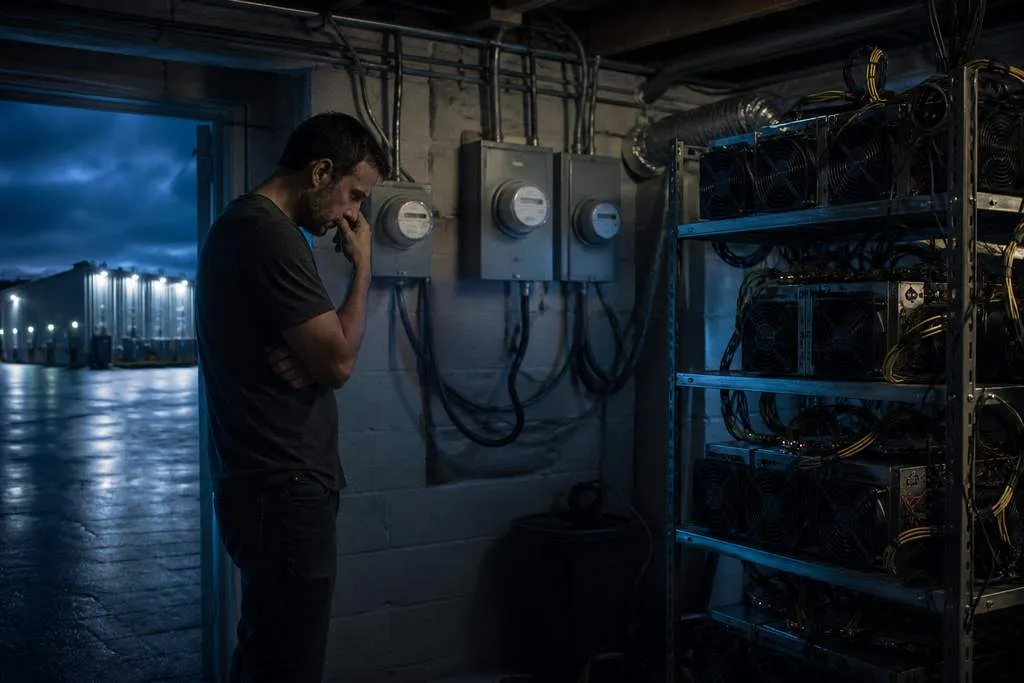
Bitcoin mining is easiest to understand as a bookkeeping race. Miners compete to assemble recent transactions into a valid block and prove, through repeated hashing, that they expended computational work. The network accepts the first valid result that meets the current difficulty target, and that miner earns the block reward and any included transaction fees. This process is what keeps Bitcoin’s ledger synchronized without a central operator.
That simple description hides a practical reality: participating in the race requires specialized machines, steady electricity, heat management, and a legal setting that allows the activity. The core question is rarely only whether mining itself is lawful in the abstract. It is usually about where the machines run, how power is sourced, which contracts apply, and what local rules say about business activity, noise, zoning, and taxes. Comparing the main ways people mine makes the legal picture much clearer.
What is it legal to mine bitcoin actually depends on
In many places, there is no statute that says “Bitcoin mining is legal” or “Bitcoin mining is illegal.” Instead, mining falls under existing rules for property use, electricity consumption, business licensing, environmental permits, customs, sanctions compliance, and taxation. That means the answer can differ sharply between countries, states, provinces, cities, apartment buildings, and commercial sites.
At the national level, a government may allow possession and use of mining equipment but restrict crypto activity through energy controls, financial regulation, or direct bans. At the local level, the friction points are often more ordinary: whether the wiring can safely handle the load, whether a landlord forbids high-consumption devices, whether a neighborhood code limits industrial noise, or whether a utility requires a different tariff for continuous heavy usage. Mining can therefore be lawful in a country yet still violate a lease, a homeowners’ association rule, or a utility contract.
Mining at home: the broadest access, but the most local restrictions
Home mining is the most accessible option because it avoids negotiating with a data-center operator or buying shares in someone else’s project. A miner can buy an ASIC, connect it to a pool, and begin contributing hash power. Legally, though, home mining sits inside the densest web of small rules. Residential electricity plans are written for household use, not always for round-the-clock operation of high-wattage hardware. Some utilities permit it without issue; others may require notice, a different rate class, or compliance with demand-related terms.
Landlord-tenant rules matter just as much. A lease may prohibit alterations to electrical systems, excessive heat-producing devices, or any activity that resembles business use. Condominiums and apartment buildings can add noise and ventilation restrictions, which are relevant because ASIC miners produce constant fan noise and substantial heat. Fire safety is another legal layer. Using extension cords, overloaded circuits, or improvised ventilation can become a code problem even where mining itself is not restricted.
For a homeowner, zoning usually becomes an issue only when the setup grows beyond personal use. A single machine in a garage may draw little attention beyond power consumption and noise. A room full of units, exterior exhaust modifications, or repeated service upgrades can move the activity closer to home-based commercial use, triggering permit questions. The legal advantage of home mining is control; the disadvantage is that every local constraint lands directly on the operator.
Hosted mining shifts the legal burden, not the need for due diligence
Hosted mining means owning or leasing machines that run in a third-party facility. This model is common where industrial power, cooling, and maintenance are easier to secure than in a residence. It also changes the legal exposure. The host usually handles site permits, utility relationships, physical security, and day-to-day operations. For the customer, that can reduce the risk of violating residential rules or struggling with electrical compliance.
That does not make hosted mining legally simple. The key documents are the hosting agreement, service level terms, custody provisions, and shutdown rights. A host may have broad discretion to power down equipment during grid stress, nonpayment disputes, or regulatory events. Some contracts place responsibility for taxes, import paperwork, and wallet configuration on the customer. Others reserve the right to relocate machines across borders or between sites, which may create sanctions, customs, or reporting issues depending on where the equipment ends up.
Jurisdiction matters twice in hosted mining: where the facility is located and where the customer resides. A miner may be perfectly lawful in the host country but still need to report crypto-related business income, imported equipment, or foreign-held assets under home-country rules. The legal advantage of hosting is operational specialization. The legal tradeoff is dependence on a contract and on a facility operator’s compliance posture.
Cloud mining offers convenience but the highest legal and contractual risk
Cloud mining usually means paying a company for a contract tied to hash rate rather than operating identifiable machines. This is the simplest format for a beginner, but it is also where legal and commercial caution should be strongest. In some arrangements, there is real mining capacity behind the contract. In others, the buyer has little visibility into whether hardware exists, where it runs, or how revenues are calculated.
That opacity creates several legal concerns. Consumer protection law may matter if the seller’s marketing is misleading. Securities law can become relevant if the product is structured and sold in a way that resembles an investment contract. Cross-border enforcement is often weak when the provider is in a distant jurisdiction. Even where cloud mining is not expressly banned, disputes over payouts, fees, and contract termination can be hard to resolve if the customer lacks a clear claim to specific equipment.
Anyone comparing mining options should treat cloud contracts less like hardware ownership and more like counterparty exposure. The convenience is real, but the user has the least direct control over legal compliance, operational transparency, and asset recovery.
Joining a mining pool is usually lawful, but it changes reporting and compliance
Most miners, whether at home or in a hosted facility, join a mining pool. A pool aggregates hash power from many participants and distributes rewards according to its payout method. Pool participation is typically legal wherever mining itself is legal, because a pool is a coordination service rather than a separate kind of asset. Still, it adds another layer of terms and data handling.
Pool operators may require account verification, maintain logs of worker activity, and impose payout thresholds or wallet restrictions. If the pool is operated from another country, local rules on money transmission, sanctions screening, or tax reporting can affect how it serves users. For the miner, the practical legal issue is recordkeeping. Pool payouts can generate many small taxable events depending on local law, and the timing of income recognition may not match when coins are later sold. That is one reason miners need clean records of rewards, fees, hosting invoices, and equipment purchases.
Costs, permits, and taxes matter more than the headline legality
A legal path to mine Bitcoin can still be a poor decision if the supporting costs and obligations are ignored. Mining hardware draws continuous power and degrades over time. It may require electrical upgrades, dedicated circuits, dust control, and replacement parts. If equipment is imported, customs duties, classification disputes, and shipping delays can become part of the project. If it is operated as a business, local registration, sales tax treatment, and deductible expense rules may apply.
Tax treatment varies by jurisdiction, but the common pattern is that mined coins are not invisible just because they are created through protocol rules. Authorities often care about when rewards are received, how business expenses are documented, and what happens when the coins are later disposed of. Someone mining casually at home and someone operating racks through a hosting provider may face very different bookkeeping expectations even if both are engaged in the same underlying network activity.
The result is that the best legal comparison is not only home versus hosting versus cloud. It is also personal hobby use versus formal business operation. The same machine can sit on either side of that line depending on scale, contracts, and intent.
The safest way to act on is it legal to mine bitcoin
Start with the physical location of the machines, because that determines most of the real-world rules. For home mining, check the lease or building rules, confirm the electrical setup is code-compliant, and review the utility’s terms for sustained high consumption. For hosted mining, read the service agreement as closely as the hardware spec sheet, paying attention to shutdown rights, jurisdiction, custody, and fee changes. For cloud mining, assume that lack of transparency is a legal risk in itself and require clear evidence of how the contract works.
If the setup is more than experimental, treat mining like a business activity from day one: preserve invoices, document rewards, separate accounts, and verify local tax treatment before the first payout arrives. The concrete takeaway is simple: the most defensible option is usually the one where the site rules, power contract, and records are clearest, even if it is not the easiest to start. Legal mining begins with lawful use of space and electricity, then with contracts that can survive scrutiny.