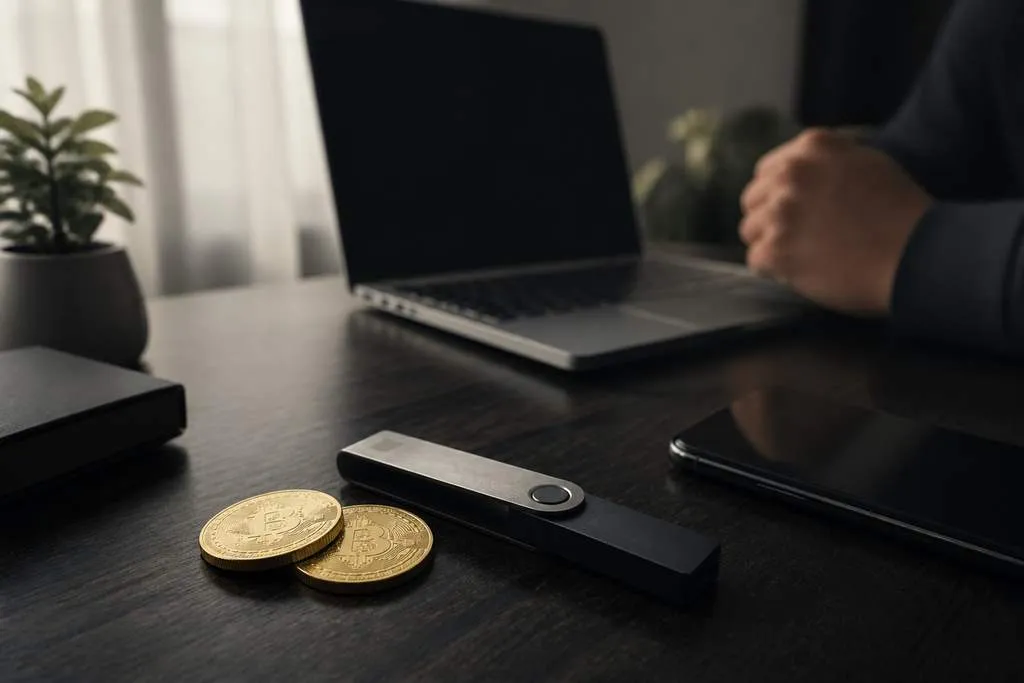

A warm wallet occupies the middle ground between the two familiar extremes of crypto storage. A hot wallet keeps keys on an internet-connected device and signs transactions instantly; cold storage keeps keys fully offline. A warm wallet applies stronger controls than an ordinary hot setup while staying available to sign regularly — usually a hardware signer used as the day-to-day spending account, or an online key-management system that splits keys across several parties and requires approvals before funds move.
The cost structure deserves as much attention as the security model, because the tier a person or business chooses decides which fee lines ever appear. Some costs are one-time, some recur monthly or annually, some go to the network itself, and some show up only as staff hours. Separating them makes it possible to spend where controls genuinely add safety and to skip spending where they add nothing.
What is a warm wallet in crypto and where the money actually goes
Warm storage generates costs in four places. Setup covers the signing device and the time to configure it. Recurring platform charges exist only when a managed product is involved — a wallet-as-a-service subscription or a custodian. Network fees are paid on every transfer and are set by the blockchain, so they are identical whether keys sit in a browser extension, a warm setup, or a locked safe; the tier changes how often those fees are triggered and how efficiently each transaction is used. The fourth bucket is operations: approvals, monitoring, and recovery drills that consume staff time rather than money. A solo holder mostly pays the first and third; an organization pays all four, and the fourth is usually the largest line.
Upfront hardware and software costs
The device is the main purchase. Mainstream hardware wallets from makers like Ledger and Trezor sell for roughly $50 to $250 depending on screen quality, connectivity, and secure-element features, with premium models above that. A dedicated cheap phone or an old laptop, kept offline except when signing, can substitute for almost nothing. The software side is usually free: companion apps for the major devices are open source, so the payment buys the hardware alone.
Where the purchase happens matters. Manufacturers restrict shipping to certain sanctioned jurisdictions, and local taxes or import duties can push the final price above the sticker figure; resellers in some countries mark devices up well beyond the official price. Buying direct from the maker, in sealed packaging, is both the cheaper and the safer route, because a secondhand signer can be tampered with in ways that defeat its purpose entirely.
How warm wallet workflows change network fees
Network fees themselves do not change with the storage tier — they belong to the chain, not to the wallet. What changes is the pattern of spending them. Without a warm tier, operators shuttle funds between hot and cold storage as balances fluctuate, and every shuttle is a paid transaction. A warm float absorbs routine outflows, so bulk holdings stay in cold storage and only genuine payments get signed. Batching helps further: consolidating many payouts into a single transaction divides its base fee across all recipients.
On Ethereum and similar chains, token approvals normally cost a separate gas transaction before any transfer can occur; wallets that support permit signatures (EIP-2612) fold the approval into the transfer itself and skip that charge. When congestion spikes, a stuck transaction may need a fee bump to be replaced — a small cost, but one that a well-run warm setup budgets for rather than discovering mid-crisis.
Platform and custody fees when someone else runs the warm layer
Managed options replace the device purchase with subscriptions. Wallet-as-a-service vendors such as Fireblocks or Copper quote annual platform fees, often with additional per-transaction or API charges, and pricing is negotiated based on users, policies, and integrations. Custodians typically charge an annual percentage of assets under custody, sometimes with a minimum fee that dominates at small balances. Exchange custody of this kind is bundled into withdrawal fees and spreads rather than billed separately.
Definitions blur in vendor marketing, and some products charge a premium for the word “warm” without adding any of the controls that would justify it, so it pays to cross-check an independent reference on what is a warm wallet in crypto before signing a platform agreement. The premium is worth paying only where it buys real machinery: address whitelisting, quorum approvals, and audit logs that a small team would otherwise have to build itself. Below a certain volume, those same features are pure overhead.
Operational costs that never appear on an invoice
Setting up a signing quorum takes a coordinated session among the people who will hold key shares, and the policy defining who can approve what usually takes longer to write than to enforce. Staff need training on the signing workflow, recovery drills need to be rehearsed before a device fails rather than after, and monitoring tools range from free dashboards to paid subscriptions. Custodial arrangements sometimes bundle insurance, whose cost sits inside the quoted fee. For small teams, this labor often exceeds every direct fee combined.
Hot, warm, and cold storage compared by cost
The table below condenses the fee picture across the three tiers. Read it as a map of which costs appear at each level, not as exact prices, which vary by device, vendor, and country.
| Storage tier | Setup cost | Recurring cost | Where fees bite |
|---|---|---|---|
| Hot wallet | Free software on a device already owned | None | Network fees on every move; breach exposure |
| Warm wallet | Hardware signer, roughly $50–$250 | Platform or custody fee if managed | Network fees, platform charges, staff time |
| Cold storage | Same hardware, or nearly free on paper | None | Network fees only when funds move in or out |
The pattern most operations converge on follows directly from those rows: cold storage for bulk holdings, a warm float sized to regular outflows, and a hot wallet only for small instant needs. Each tier is then paid for exactly the job it does — the cheap tiers handle frequent small movements, and the protected tier holds value that rarely needs to move at all.
Sizing the setup to what it will actually cost
Choose by outflow frequency first. A person moving funds weekly needs one hardware signer in the $50–$150 range, and everything else — software, batching, test transactions — costs nothing beyond network fees. A business paying out dozens of times a day should price the labor of manual signing against a managed platform’s annual quote and collect two competing bids, since at that volume the subscription can cost less than the hours it replaces. Cap the warm float at one or two months of expected outflows so a worst-case breach has a hard ceiling, buy devices direct from the manufacturer after confirming they ship to the relevant country, and run a small test transfer through any new signer before it holds real value. Those four decisions set nearly the entire lifetime cost of warm storage.