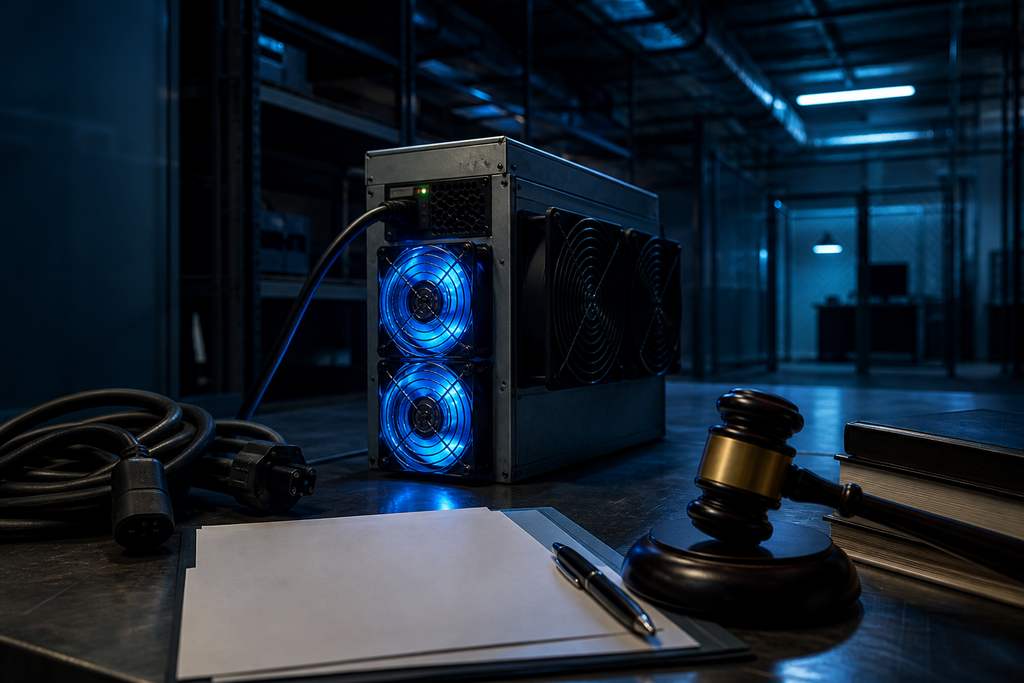
Search for ant crypto and the results split three ways: ANT, the governance token of the Aragon ecosystem for decentralized organizations; AntChain, the enterprise blockchain operated by Ant Group, the Alibaba-affiliated company behind Alipay; and Antminer, Bitmain’s long-running line of ASIC mining hardware. The three share a syllable and nothing else, yet price aggregators, forum threads and headline writers use the same shorthand for all of them. Most of the money lost around this term is lost to that collision rather than to price moves.
The pattern repeats: someone buys the wrong asset on the strength of a name, acts on an outdated listing, or assumes a familiar word implies familiar ownership. Each failure has a cheap fix — a contract-address check, a listing-status check, a rough electricity calculation — and each is covered below.
What is ant crypto: three projects, one name
Aragon launched in 2017 to build tooling for decentralized autonomous organizations, and ANT was its governance token. AntChain is a permissioned blockchain that Ant Group sells to Chinese enterprises for supply-chain records, digital copyright and identity services; it has no token any retail investor can hold. Antminer is physical hardware — specialized machines Bitmain has sold since 2013 for computing proof-of-work coins such as Bitcoin. The table shows how little the three share besides the word itself.
| Project | What it is | Where the name appears | Retail access |
|---|---|---|---|
| ANT (Aragon) | Governance token of a DAO-building toolkit | Price trackers, legacy exchange listings | Tradeable where still listed; winddown and ETH redemption announced in 2023 |
| AntChain | Ant Group’s enterprise blockchain for corporate services | Company announcements, enterprise case studies | No public token exists |
| Antminer | Bitmain’s ASIC mining hardware line | Reseller sites, second-hand marketplaces | Physical hardware, not a token |
Buying ANT without checking its winddown status
Aragon spent years as one of the best-known names in DAO infrastructure, and ANT sat in thousands of wallets from the 2017 token sale onward. In late 2023 the Aragon Association announced it would wind down the token and opened a redemption program converting ANT into ETH at a fixed rate of 0.25 ETH per ANT. Major centralized exchanges removed ANT from their spot markets that same year. Some trading continues on smaller venues, but liquidity is thin and the token no longer anchors a functioning governance system.
Three mistakes follow from that sequence. The first is buying ANT because a price tracker still shows a live chart; the chart reflects whatever residual trading remains, not a project with a future. The second is holding without acting, since anyone who misses the announced redemption terms may end up with a token that has neither a market nor a purpose. The third is clone contracts: whenever an old ticker gets attention, new tokens with the same name appear on decentralized exchanges, and they share nothing with the original except the label. Match the contract address against the one published by the project before any transfer.
Assuming AntChain offers an investment to buy
AntChain runs permissioned infrastructure for corporate clients, which means participation is by agreement with the operator, not through an open market. Ant Group is privately held, so there is no AntChain share or coin to purchase. The only indirect exposure runs through Alibaba stock, since Alibaba holds roughly a third of Ant Group.
The mistake to avoid is treating any coin branded with the AntChain name as a stake in that business. Tokens calling themselves AntChain Coin or similar have appeared on small exchanges and decentralized pools, and corporate affiliation is exactly the impression they are designed to create. A company that runs a private blockchain for enterprise clients has no mechanism through which a random token would accrue value from its operations, so the claim fails on its face before any price analysis matters.
Overpaying for Antminer hardware you cannot run profitably
The Antminer label covers a range of machines, from the S-series units that mine Bitcoin to models built for Litecoin and Dogecoin. A current-generation Bitcoin unit draws roughly three thousand watts continuously and produces about seventy to eighty decibels of noise, which rules out apartments and most spare rooms. At typical residential electricity rates in North America and Europe, power costs alone can exceed the value of coins an older unit produces, with the exact outcome depending on the coin’s price and network difficulty.
Purchasing mistakes cluster in three places. Used machines are frequently sold with modified firmware that inflates the hashrate a buyer sees during testing, so the delivered performance falls short of the listing. Hosting deals concentrate risk further: the operator holds the hardware and the payout address, and hosting businesses in the sector have collapsed, leaving customers with neither. Finally, resale value tracks the Bitcoin cycle closely, which means overpaying at a market peak compounds the loss when hardware prices retreat. A break-even calculation at the buyer’s actual electricity rate, done before payment, eliminates most of these losses.
How to confirm which ant project you are actually looking at
Three checks settle nearly every ambiguity. First, identify any token by ticker plus contract address on a block explorer; the genuine ANT has one canonical contract and lookalikes do not share it. Second, check the listing status on major exchanges, because delistings are documented and a token absent from large venues but traded on an obscure one is a warning sign in itself. Third, look for a public team, an active codebase and recent announcements from the project itself rather than from promoters.
When the sources you find contradict each other, a neutral reference saves time. The crypto FAQ archive at Crypto Regulation News answers what is ant crypto alongside other frequently confused tickers, which is often enough to rule out a lookalike before any money moves.
The routine to follow before any ant-branded purchase
Turn the checks above into a fixed sequence executed every time the name surfaces in an offer, a thread or a listing alert:
- Identify the project by ticker and contract address, never by name alone.
- Check whether major exchanges still list the token; widespread delisting signals a project in formal decline regardless of forum enthusiasm.
- If a redemption program exists, follow the project’s official announcements and redemption interface rather than selling into a thin market.
- For hardware, run the break-even math at your own electricity rate first, and treat any hosting offer as an unsecured loan to its operator.
None of these steps takes more than a few minutes, and together they make the shared name harmless: the word stops being a signal and becomes something you verify past.