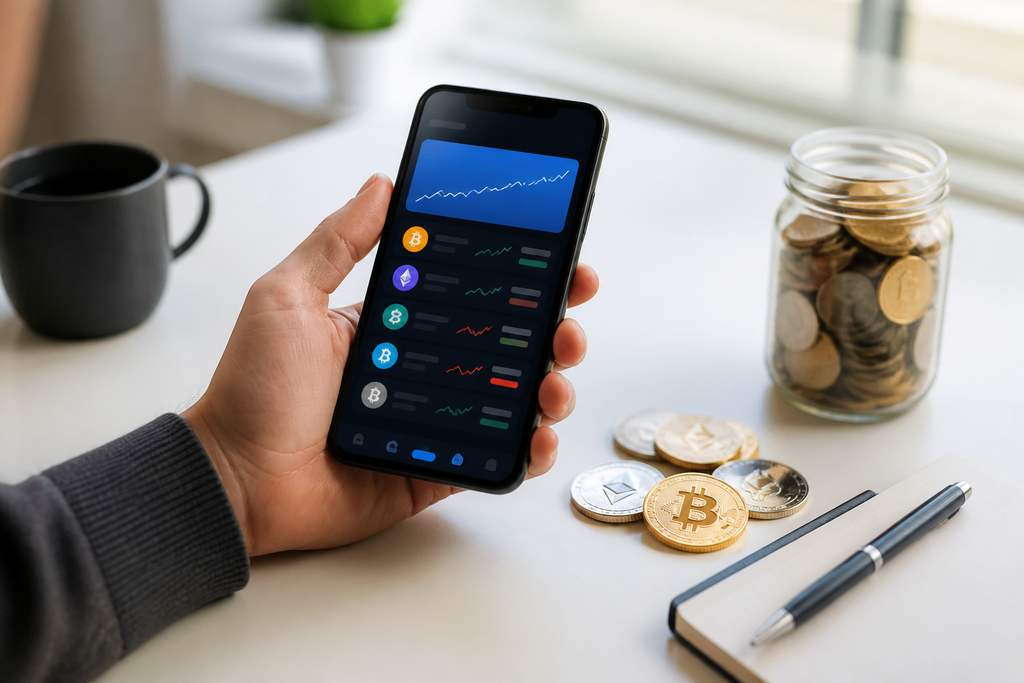
Crypto is a way to hold and transfer digital assets on a blockchain, a shared ledger updated by a distributed network rather than a single bank or card company. In practice, people use crypto for a few distinct jobs: holding an asset they expect to rise or fall in value, sending funds across borders, paying for goods where merchants accept it, interacting with blockchain applications, or holding tokens that represent access, governance, or stable value.
The hard part is not opening an account or downloading a wallet. The hard part is understanding which tool fits which job, and avoiding errors that cannot be reversed. A bank transfer can often be disputed. A crypto transfer sent to the wrong network, wrong address, or fraudulent platform usually cannot. Most expensive mistakes come from confusing investing with payments, confusing custodial accounts with self-custody, and treating every token as if it worked the same way.
What is crypto and how do you use it in everyday terms
At the simplest level, crypto combines a digital asset with a payment rail. Bitcoin was designed mainly as peer-to-peer digital money. Ethereum expanded the idea by letting developers run smart contracts, which are programs on the blockchain that can move assets based on preset rules. Stablecoins aim to track a reference asset such as the US dollar, making them more practical for transfers and on-chain transactions than highly volatile coins.
Usage follows from those design choices. Someone saving in bitcoin is making a very different decision from someone using a dollar stablecoin to move funds between exchanges, and both differ from someone paying gas fees on Ethereum to use a decentralized application. Trouble starts when a newcomer buys a token without understanding whether it is meant to store value, pay network fees, grant access to an app, or simply exist as a speculative asset with thin liquidity.
The first mistake: buying before choosing the right setup
New users often start with the coin and ignore the account structure. The safer order is the reverse: choose where the asset will be held, how it will be funded, and how it may need to be moved later. A regulated exchange account may be enough for small, occasional purchases. A self-custody wallet may be more suitable for someone who plans to use on-chain applications. A hardware wallet may make sense for larger holdings that do not need frequent movement.
The biggest setup error is assuming every wallet supports every asset and network. A wallet can display many tokens but still require the correct network for deposits and withdrawals. Sending an asset over the wrong chain can leave funds inaccessible unless the receiving service supports recovery, and many do not. Before any transfer, the asset, network, and destination address need to match exactly.
The comparison below shows the tradeoffs that matter before the first purchase.
| Storage option | Control of keys | Best use | Main risk |
|---|---|---|---|
| Exchange account | Platform controls | Easy buying and selling | Counterparty risk |
| Software wallet | User controls | Active on-chain use | Device compromise |
| Hardware wallet | User controls | Long-term storage | Seed phrase loss |
| Custodial app wallet | Provider controls | Simple transfers | Limited recovery options |
Why network confusion causes more losses than price moves
Price volatility gets most of the attention, but basic transfer mistakes are often more damaging because they are preventable. Many assets exist on multiple networks. A stablecoin may be available on Ethereum, Tron, Solana, and other chains, each with different fees, wallet support, and deposit rules. If a recipient asks for USDC on one chain and funds are sent on another, the asset may not arrive in a usable way.
Fees also behave differently across networks. Some chains charge fees in the same asset being moved, while others require the chain’s native token. That creates a common trap: receiving a token into a wallet and then being unable to move it because there is no native token available for gas. Small test transactions reduce this risk. So does reading the receiving platform’s deposit instructions instead of relying on token symbols alone.
People searching what is crypto and how do you use it are usually not asking for theory; they are trying to avoid exactly these practical failures around wallets, chains, and fees.
Scams that exploit beginners and the checks that matter
Most crypto scams do not involve advanced hacking. They rely on urgency, imitation, and fake authority. A fraudulent site copies a real exchange login page. A social media account pretends to be support staff. A token contract is promoted as the next major project, but the liquidity is shallow or controlled by insiders. A message claims a wallet is compromised and asks for a seed phrase. The common thread is pushing the user to act before verifying.
Three checks catch a large share of these schemes. First, enter exchange and wallet URLs manually or from a saved bookmark rather than from ads or direct messages. Second, never share a seed phrase or private key; legitimate support does not need it. Third, verify the exact token contract address from the project’s official documentation before buying a new asset, because scammers often create lookalike tokens with similar names and symbols.
Another frequent error is trusting yield without understanding the source. If a platform offers returns on deposited crypto, those returns come from somewhere: lending, market making, staking mechanics, or incentives funded by token issuance. If the source is vague, the risk is being hidden rather than removed.
Using crypto for payments, transfers, and apps without overcomplicating it
For payments and transfers, stablecoins are often easier to use than volatile coins because the sender and receiver can estimate value more clearly. The practical questions are network support, fee levels, and whether the recipient can convert or spend the asset easily. For cross-border transfers, crypto can reduce settlement delays, but compliance checks at exchanges still matter when converting to local currency.
For decentralized apps, the main mistake is approving transactions blindly. Wallets often ask for token approvals that let an app spend assets later. A user may think they are making a single swap while actually granting a broad spending permission. It is safer to read approval prompts carefully, use reputable applications, and revoke old permissions when they are no longer needed. Keeping a separate wallet for experimentation can also limit damage if a risky app is compromised.
Tax treatment adds another layer. In many places, selling crypto, swapping one token for another, spending crypto, or earning rewards can all create reportable events. Even when the blockchain transaction feels simple, the tax result may not be. Good records from the start are far easier than trying to reconstruct wallet activity months later.
A practical first plan that avoids most beginner errors
A sensible first plan is narrow. Start with one regulated on-ramp, one well-supported asset, and one clear purpose. If the goal is learning transfers, use a small amount and perform a test transaction. If the goal is long-term holding, decide in advance when self-custody becomes necessary and back up the recovery phrase offline. If the goal is using apps, fund a separate wallet with only the amount needed for activity and gas.
Do not treat every crypto action as investing. Some actions are payments, some are software use, and some are storage decisions. Matching the tool to the job prevents most losses. The concrete takeaway is simple: before buying anything, write down the asset, the network, where it will be stored, how it will be recovered, and how it will be used. If any of those five answers is unclear, pause there rather than learning through a mistake that the blockchain will not undo.