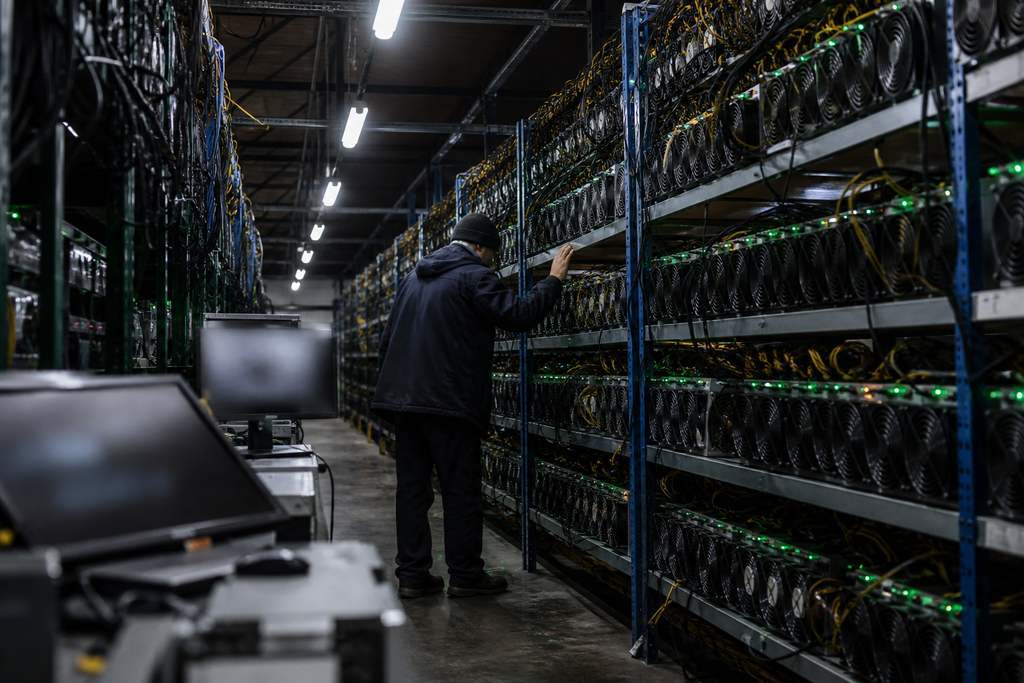
Crypto mining is the process that secures certain blockchains by turning computing work into valid blocks of transactions. On proof-of-work networks, miners compete to find a result that meets the network’s rules, and the winner earns block rewards and transaction fees. The hardware choice, electricity cost, and network difficulty shape whether mining is a hobby, a business, or a dead end.
For buyers looking at mining as a way to gain crypto exposure, the real comparison is not just profit potential. It is whether the method matches the budget, noise tolerance, technical skill, and time available for setup and maintenance. That makes a side-by-side look at the main options more useful than a simple definition.
What is crypto mining in practice on proof-of-work networks
At a technical level, mining is a race to produce a block that satisfies a difficulty target. Miners bundle pending transactions, compute repeatedly, and broadcast the first valid block they find. The network then confirms it, updates the chain, and adjusts to the next round of work.
This process exists to make rewriting the chain expensive. A miner cannot simply announce ownership of coins; the system requires proof that real computation was performed. That is why mining has always been tied to specialized hardware and cheap power, even when the coins being mined are widely traded.
Not every blockchain uses mining. Some use proof of stake, where validators lock coins instead of burning electricity. For networks that do rely on mining, the most important differences come down to how the work is done and who can realistically compete.
ASICs, GPUs, and CPUs compared for mining
The equipment choice determines most of the economics. The table below shows how the main hardware options differ in cost, flexibility, and where they tend to make sense.
| Hardware | Best use | Main tradeoff |
|---|---|---|
| ASIC | Single-coin mining | Highest efficiency, least flexibility |
| GPU rig | Multiple mineable coins | More adaptable, usually lower efficiency |
| CPU | Lightweight or niche algorithms | Lowest output, limited competitiveness |
| Cloud mining | No hardware ownership | Counterparty and contract risk |
ASICs are built for one algorithm and usually dominate on mature networks because they deliver more hash power per watt. That makes them the first choice for miners who want maximum efficiency and are willing to lock into one coin or one family of coins. The drawback is obvious: when the algorithm or market changes, the machine may have little resale value.
GPU rigs are more flexible. A miner can switch between coins as profitability changes, which matters when one network becomes crowded or when a coin’s reward falls. The cost is that GPUs usually consume more power for the same output, so margins can be thinner. CPUs sit at the far end of the spectrum and are mostly relevant for coins designed to resist specialized hardware.
Solo mining, pools, and cloud contracts
Another major decision is whether to mine alone, join a pool, or outsource the work. Each route changes how rewards arrive and how much control the miner keeps.
Solo mining means keeping all rewards if a block is found, but the income is irregular and usually tiny unless the miner controls substantial hash power. It suits operators who can tolerate long dry spells and want full independence. For most small operators, the variance is too high to treat it as dependable revenue.
Mining pools combine the hash power of many participants and share rewards according to contribution. This smooths payouts and makes mining accessible with smaller rigs. Pools also reduce the chance of waiting months without a single reward, which is why they are the default choice for most individual miners.
Cloud mining replaces hardware ownership with a contract. In theory, it gives exposure without noise, heat, or maintenance. In practice, the buyer depends on the contract terms, the operator’s honesty, and the operator’s uptime. For readers deciding whether to buy into mining, the core question is often what is crypto mining versus what is merely a hosted revenue share wrapped around it.
That comparison matters because cloud offers convenience, but not control. Pool mining still leaves the user with hardware, wallet access, and a direct view of the operation. Cloud products can look simple on the surface while hiding fees, maintenance deductions, or payout conditions that are hard to verify.
How electricity and location change mining economics
Power cost is often the deciding factor. Mining turns electricity into a digital asset, so the local rate for power can make the same machine profitable in one place and uneconomic in another. Cooling, noise, and building limits also matter because mining hardware generates continuous heat.
Location affects more than utility bills. Regions with stable grids, permissive zoning, and available industrial space are easier for mining than dense residential areas. A home setup may work for small-scale experimentation, but constant fan noise and heat can make it impractical quickly.
Regulatory treatment also varies. Some jurisdictions welcome miners as a source of load balancing or industrial investment, while others restrict them because of energy demand. Anyone buying hardware without checking local rules risks owning equipment that cannot be used at full capacity.
Revenue, risk, and the hidden costs behind mining
Mining revenue comes from block rewards and fees, but the actual result depends on network difficulty, coin price, uptime, pool fees, and hardware efficiency. Those variables change constantly, so a machine that looks profitable on one day may be marginal the next.
Depreciation is another cost that new buyers often underestimate. Newer ASIC generations can make older models unattractive fast, and GPUs face slower but still real value loss as demand shifts. Hardware failures, replacement fans, power supplies, and dust management also chip away at returns.
There is also opportunity cost. Money tied up in machines cannot be used to buy the coin directly, stake another asset, or sit in cash. Mining only makes sense if the operator values the operational exposure and believes the equipment can produce coins at a better effective cost than simply purchasing them.
Which mining option suits different buyers
The best choice depends on the goal. A technical buyer with cheap power and room for industrial-style equipment usually has the strongest case for ASICs. A more flexible user who wants to switch between coins may prefer GPUs, even if the margins are lower. A small participant who wants predictable payouts will usually find a pool more practical than solo mining.
Cloud contracts are the easiest to start, but they demand the most trust and the least control. They suit buyers who want exposure without handling hardware, yet they are the hardest to verify independently. If the contract terms are opaque, the convenience premium can erase the appeal.
The cleanest way to decide is to compare the total stack of costs, not just the sticker price. Hardware efficiency, power rate, pool structure, and resale value tell a more honest story than headline reward estimates. A buyer who understands those pieces can choose a route that fits the budget instead of treating mining as a shortcut to free coins.
Takeaway for buyers comparing mining options
Mining is a hardware-and-electricity business first, and a crypto strategy second. ASICs maximize efficiency, GPUs maximize flexibility, pools reduce payout variance, solo mining preserves independence, and cloud mining trades control for convenience. The right option is the one that matches power costs, technical comfort, and risk tolerance before any coin price forecast enters the picture.