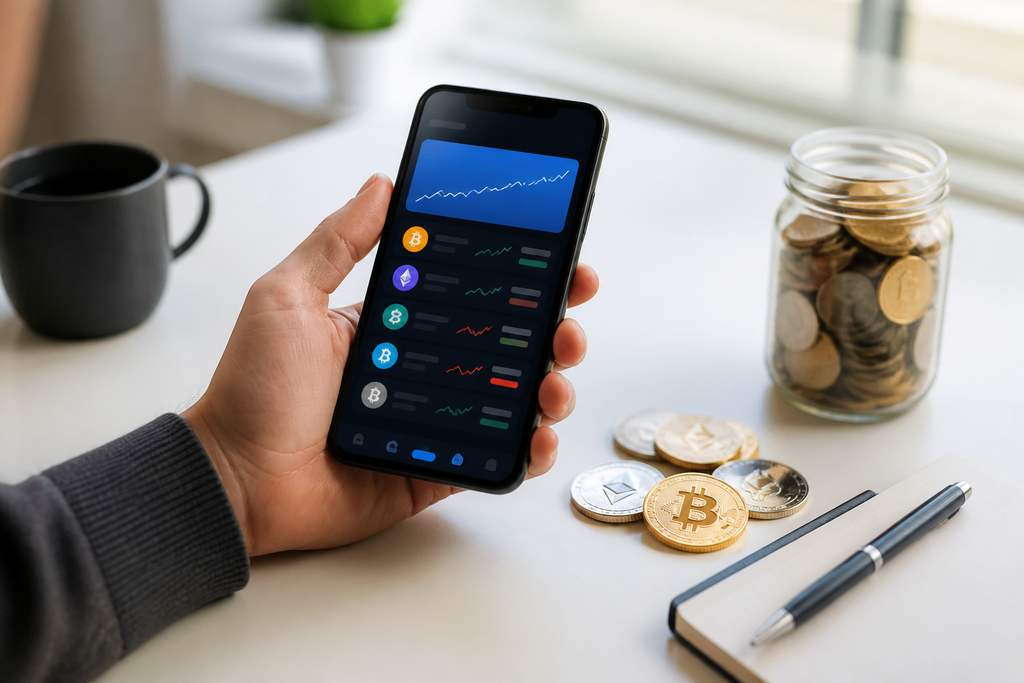

GLM crypto refers to the token used in the Golem network, a project built around decentralized compute services. At a practical level, the question is less about a single coin and more about how the token fits into usage, custody, and access across different venues. That matters because the same asset can look very different depending on whether it sits on an exchange, in a self-custody wallet, or on a network that uses an ERC-20 standard.
For readers approaching it from a buy-intent angle, the useful comparison is not price speculation but the available routes into the asset and the tradeoffs each route creates. Some options favor convenience, others favor control, and the right choice depends on whether the priority is quick trading, long-term holding, or interacting with the token in an external wallet.
What is GLM crypto on the market and in the network
GLM is the token most closely associated with Golem, which aims to let users and providers exchange computing resources. In market terms, it behaves like a standard cryptoasset that can be listed on exchanges, moved between wallets, and settled on-chain. In network terms, it serves as the unit that anchors value transfer around the ecosystem rather than existing as a standalone payment coin with no application layer behind it.
The main point of comparison is utility versus tradability. A token can have a role inside a network and still be bought mainly as a market asset. GLM sits in both categories. That means buyers usually encounter it first through exchange listings, while users interested in the protocol look at wallet compatibility and token standards as part of actual network use.
Exchange purchase, wallet holding, and direct on-chain use
The three most common ways to handle GLM are through a centralized exchange, a software wallet, or a hardware wallet. Each route changes the balance between ease, control, and operational risk. The table below captures the differences that matter most when choosing where to keep or move the token.
| Option | Control | Convenience | Main tradeoff |
|---|---|---|---|
| Centralized exchange | Exchange holds assets | High | Custodial risk |
| Software wallet | User controls keys | Medium | Requires careful key management |
| Hardware wallet | User controls keys offline | Lower for daily use | Slower access, extra device step |
An exchange is the simplest entry point for most buyers because it combines account funding, price discovery, and execution in one place. That convenience is the reason many people start there. The cost is that the asset is only as secure as the platform’s custody model and account controls, so the user does not directly hold the private keys.
A software wallet changes the equation by giving the holder direct control over the asset. That is a better fit for users who want to move GLM across services or interact with token infrastructure without relying on an exchange’s internal ledger. It also places more responsibility on the holder, since a lost recovery phrase or a compromised device can create irreversible loss.
A hardware wallet is the more conservative custody choice for anyone holding a larger balance or planning to keep the token for a long period. It reduces exposure to online compromise by keeping signing keys off the main device. The downside is friction: each transfer requires the hardware device, which makes it less suitable for frequent trading or small repeated transactions.
How GLM crypto compares with other token routes
GLM is not unusual in having both exchange liquidity and self-custody support, but the details of the token standard matter. Many buyers compare it with assets that live on a single chain or with native coins that require a dedicated wallet stack. GLM’s ERC-20 lineage makes it broadly compatible with common Ethereum-based tools, which lowers the barrier to entry for wallet support and transfers.
That compatibility cuts both ways. A token that follows a widely used standard is easier to store and move, but users still need to pay attention to the network they are using for transfers and the wallet address format they choose. A mistaken transfer path can create avoidable friction, even when the asset itself is well supported. For background reading that stays on the buying and terminology side, the site’s FAQ section on what is glm crypto is the relevant place to start.
The comparison against other compute-related or utility tokens usually comes down to whether the asset has obvious exchange liquidity, whether wallets recognize it cleanly, and whether the user actually needs protocol interaction. If the goal is simply exposure, exchange access is enough. If the goal is ongoing use or storage outside a platform, wallet choice becomes the real decision.
Network compatibility and transfer behavior
Because GLM is tied to an Ethereum-style token framework, compatibility is generally strongest with wallets and services that already support ERC-20 assets. That makes address handling and transfer flow familiar to users who have moved tokens on Ethereum before. It also means fees and transfer timing can be shaped by the network conditions of the chain used for settlement, not just by the token itself.
For practical use, this matters more than branding. A token with broad exchange listings can still be awkward if it is difficult to withdraw into a self-custody setup or if the receiving wallet does not support the correct standard. The healthier ecosystem is the one where listings, wallets, and on-chain transfers line up without forcing workarounds.
Liquidity, storage, and risk profile
The strongest argument for an exchange listing is liquidity. If a market has enough buyers and sellers, entering or exiting a position is easier and price discovery is cleaner. That is usually the right route for users who want speed and do not plan to hold funds on-platform for long. The weakness is concentration risk, because the user depends on the exchange’s controls, solvency, and withdrawal rules.
Self-custody shifts risk away from the platform and onto the holder. That is a better match for anyone who treats GLM as a long-term asset or wants direct access to the token outside a trading account. The real discipline here is operational: backup the recovery phrase securely, confirm wallet compatibility before transferring, and test with a small amount when moving to a new address or wallet.
Hardware storage narrows online exposure further, but it does not remove process risk. A device can still be lost, and a poorly managed backup can still fail. For larger balances, though, the added step is usually justified by the stronger control model.
Choosing the right route for a first purchase
The most sensible first purchase route is the one that matches the intended use. If the goal is to buy and monitor the asset without managing keys, an exchange is the cleanest start. If the goal is to hold outside a platform or prepare for later transfers, a software wallet is the natural next step. If the position is material or long term, a hardware wallet deserves consideration from the start rather than after the fact.
In all cases, the decisive factor is not hype around the token but the workflow around it. GLM is easy to misunderstand when it is treated as only a ticker symbol. It is better understood as an asset that sits at the intersection of a network token, a trading asset, and a self-custody instrument. That is why the comparison of access methods matters more than a generic definition.
What to do next with GLM crypto
For a concrete next step, check whether the venue you plan to use supports GLM withdrawals on the network you expect, then decide in advance whether the token will stay on the exchange or move to self-custody. That one decision prevents most of the avoidable mistakes people make when buying an asset like GLM. The right setup is the one that matches the holding period, the amount at risk, and the level of control the buyer actually wants.