Crypto still attracts attention because it can move quickly, trade around the clock, and react sharply to headlines, policy changes, and technical failures. For a cautious beginner, that mix is the point: the market offers access and flexibility, but it also demands extra care around custody, platform choice, and the risk of irreversible mistakes.
If the goal is to buy rather than speculate, the safest approach is usually the slow one. That means starting with the basics of where a coin is held, how the purchase is funded, what fees apply, and whether the service used is available and compliant in your country. The question of what is going in with crypto often comes down to these practical details, not just price charts or social media noise.
What is going in with crypto for cautious beginners
Crypto markets are a mix of public blockchains, private companies, and local rules that vary by jurisdiction. A coin can be globally tradable while the exchange that sells it may be restricted in your country, and that difference matters when buying for the first time. Beginners often focus on the asset itself, but the platform, payment method, and storage choice usually determine whether the experience feels safe or stressful.
There is also a basic risk profile to keep in mind. Crypto transfers are hard to reverse, customer support cannot undo every mistake, and price swings can happen while an order is still pending. That does not make the market unusable, but it does mean a small, deliberate first purchase is safer than a large one made under pressure.
Buying safely starts with the platform, not the coin
For most first-time buyers, the exchange or broker matters more than the asset selection. A reputable platform should clearly state where it is licensed, how it secures customer assets, and what identity checks are required. If those details are vague, the convenience of the app is rarely worth the tradeoff.
Beginners also benefit from separating two questions: can the platform process a purchase, and can it help if something goes wrong. Account recovery, fraud monitoring, and clear withdrawal rules are practical safety features. A smooth-looking interface means little if support is slow, fees are opaque, or withdrawals are routinely delayed.
Compare your main ways to buy before choosing one
Different purchase routes suit different levels of comfort. The table below shows the main differences a cautious buyer should weigh before funding an account.
| Option | Best for | Main safety tradeoff |
|---|---|---|
| Centralized exchange | Most beginners | Platform holds funds until withdrawal |
| Broker app | Simple purchases | Fewer coin choices, less control |
| Software wallet buy | Users who want self-custody | User manages keys and backup |
| Hardware wallet purchase | Larger long-term holdings | Higher setup effort, fewer shortcuts |
The safest choice is not the one with the most features. It is the one that matches your level of experience, your need for access, and your ability to manage recovery steps without confusion.
Country rules can matter as much as the asset itself
Availability often depends on where you live. Some countries allow broad exchange access, while others limit certain products, payment rails, or coins. Tax treatment can also differ, which affects whether a purchase, sale, or transfer creates a record you need to keep. A beginner should check local rules before funding an account, because the wrong assumption can cause delays or frozen withdrawals.
Payment method choice is part of the same issue. Bank transfers may take longer but can be easier to trace and reconcile. Card payments are fast but can involve higher fees or issuer declines. In some regions, the exchange may support only one or two rails, so the safe route is often the most familiar one rather than the fastest.
Keep custody simple until the amount justifies more control
Custody is where many new users make avoidable mistakes. Leaving small amounts on a reputable exchange can be practical if the plan is to trade occasionally or learn the process. Moving funds to a personal wallet adds control, but it also adds responsibility for seed phrases, device security, and transaction verification.
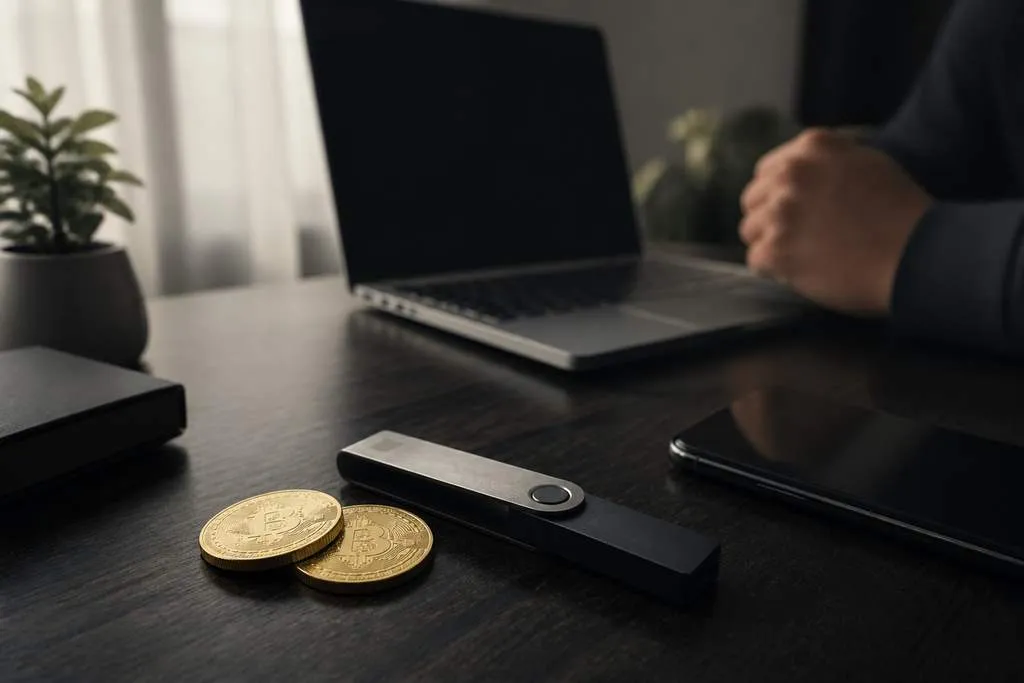
A hardware wallet is usually the strongest option for long-term holding because the private keys stay off the internet. That said, strong custody only helps if the backup process is handled carefully. A lost recovery phrase, a copied phrase stored in email, or a fake wallet app can turn a good security choice into a loss.
For a plain-language refresher on common beginner concerns, the site’s resource on what is going in with crypto is a useful place to check practical terminology and common questions before taking the next step.
Fees, spreads, and transfer delays change the real price
The headline price on a coin is only part of what a buyer pays. Exchanges may charge trading fees, payment providers may add card costs, and the quoted buy price may already include a spread. For beginners, the spread is easy to miss because it is built into the quote rather than shown as a separate line item.
Transfer delays also matter. A bank transfer can be slower to start but may settle more cleanly, while a card purchase can be instant yet more expensive. Network congestion can add another layer if coins are later moved to a wallet, since blockchain fees vary with usage. A cautious buyer should always check the full path from deposit to purchase to withdrawal before committing funds.
Small habits reduce the most common beginner losses
Security mistakes tend to be ordinary, not exotic. Phishing links, fake support accounts, reused passwords, and rushed approvals cause more problems than sophisticated blockchain attacks for most new users. A password manager, two-factor authentication, and a pause before signing any transaction prevent many of those errors.
- Use a unique password for every exchange account.
- Enable two-factor authentication with an app, not just SMS where possible.
- Verify the website address before logging in or sending funds.
- Test withdrawals with a small amount first.
- Record wallet recovery phrases offline and never share them.
It also helps to treat notifications carefully. Email alerts can warn about logins or withdrawals, but they should not be the only defense. If an account is ever compromised, speed matters, and a user who notices a problem early has a much better chance of limiting damage.
Take the first step only after the basic checks are done
The practical move for a cautious beginner is simple: choose a regulated platform available in your country, verify the payment method, start with a small purchase, and decide in advance where the asset will be held. If the plan is to hold for a while, prepare the wallet or custody method before buying. If the plan is only to learn, keep the amount small enough that an error would be manageable.
That approach keeps the focus on control rather than excitement. Crypto may be volatile, but the safest first experience usually comes from patient setup, clear records, and a willingness to wait until every step makes sense.