
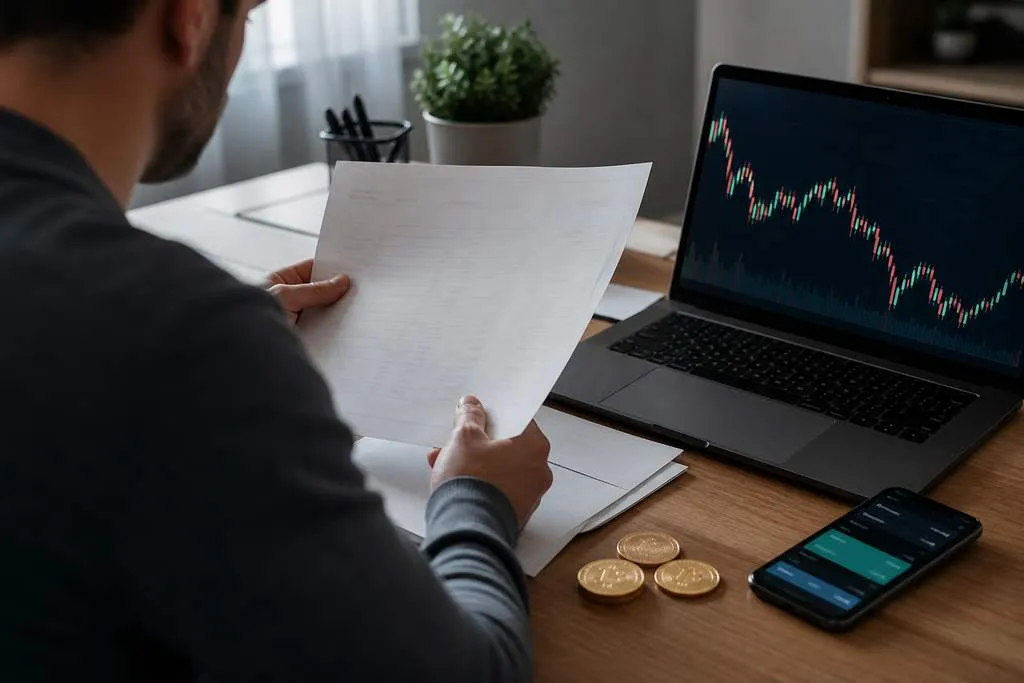
Crypto markets still move in bursts. A chart can look calm for hours and then jump on a headline, a macro print, or a rush of orders that clears the book faster than a beginner expects. That is why the first question is rarely where the price may go next; it is whether the purchase can be made without opening a bigger risk than the coin itself.
For a cautious buyer, the market is less about prediction and more about structure. Fees, order type, custody, and local access matter. A trade that seems simple on paper can become messy if the exchange is busy, the network is congested, or the platform does not serve your country in the way you assumed.
What is happening in crypto market when you are trying to stay safe
What is happening in crypto market right now is a mix of fast price discovery and fragile confidence. Some coins can move on very little volume, which means a small wave of buying or selling has an outsized effect. That is part of the appeal for traders and part of the danger for beginners.
The safest way to read that action is to treat it as a liquidity problem before it is a price problem. When bids are thin, market orders can fill badly. When sentiment flips, people who arrived late are often the first to sell. If you are looking at a first purchase, that is the real backdrop, not the headline price alone.
For a plain-language refresher, the page on what is happening in crypto market is a useful companion before any money moves. The important part is not memorising every market twist. It is knowing which parts of the trade are under your control and which parts are not.
Signals that matter before any order goes through
Beginner buyers often watch the chart and ignore the plumbing. The plumbing is where many avoidable mistakes happen. If the exchange is slow, spreads widen. If the asset trades on several venues, the quoted price may not match the fill you actually get. If the local banking rail is awkward in your country, the purchase can fail after you have already committed to it.
Two signs deserve more attention than social media chatter: liquidity and withdrawal rules. Liquidity tells you how easily you can enter or exit without paying up. Withdrawal rules tell you whether the coins can leave the platform at all, and on what network. Those details do not sound exciting, but they decide whether a small purchase stays a small purchase.
A limit order gives the buyer more control over price, while a market order buys speed and can accept a worse fill. For a cautious beginner, speed is usually overrated. A slower trade that lands where expected is easier to live with than a quick trade that surprises on cost.
How the main custody choices differ
The real safety choice is not only what to buy, but where to keep it after the purchase. This is where beginners can save themselves a lot of trouble by choosing the simplest setup that matches the amount at risk.
| Option | Best for | Main tradeoff |
|---|---|---|
| Exchange account | First purchase, easy funding | Platform risk, not full control |
| Mobile hot wallet | Small self-custody balances | Phone security matters every day |
| Hardware wallet | Larger holdings, longer storage | Slower setup, extra care needed |
An exchange account is convenient because it connects to bank transfers or cards and lets the buyer act fast. The downside is that the coins sit with a third party until they are withdrawn. A hot wallet gives direct control, but the phone or computer becomes part of the risk surface. A hardware wallet reduces online exposure, yet it only helps if the recovery phrase is kept safe and private.
Why new buyers get hurt by size, speed, and leverage
The easiest way to turn a routine purchase into a bad experience is to size it like a conviction trade before the position is understood. Small caps and even some larger tokens can move sharply in both directions, and that movement can trigger fear long before there is time to judge the thesis. Buying less than planned is often smarter than chasing a clean-looking candle.
Leverage makes that problem worse. Borrowed money magnifies a small move and can force liquidation when the market briefly dips. That is not a subtle risk; it is a direct one. A spot purchase has its own volatility, but it does not add a margin engine that can close the position for you at the worst possible time.
The same caution applies to payment method. Card buys can be convenient, but they often come with higher friction or cost than bank transfers, depending on the platform and issuer. If the goal is a first, low-stress entry, the quiet option is usually the better one.
A first purchase plan that stays boring on purpose
Start with a regulated exchange that serves your country. Set up two-factor authentication, use a password that is not reused anywhere else, and make a small spot purchase rather than a leveraged bet. If the order is meant to be a test, keep it small enough that a mistake would be annoying, not damaging.
If the balance is tiny, leaving it on the exchange for a short period may be acceptable while you learn the withdrawal process. If the balance would hurt to lose, move it to a wallet you control and test the recovery phrase before sending more. That is the point where caution stops being theory and becomes a habit.
The cleanest first move is simple: buy a small amount, keep the account locked down, and avoid leverage entirely. If the purchase feels too large to leave on an exchange, it is too large to make without a storage plan already in place.

