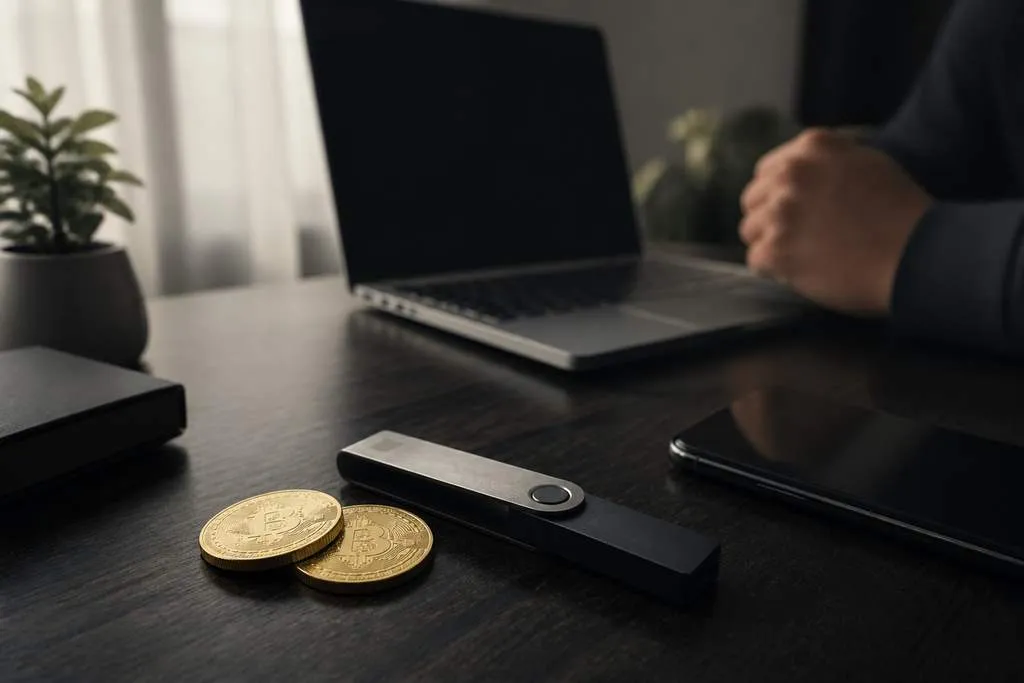
A hard wallet in crypto is usually just another name for a hardware wallet: a device that stores private keys offline and signs transactions without exposing those keys to a phone or computer. That basic idea is simple, but many of the common assumptions around it are not. People often treat it as a magic safety box, a bank account, or a tool only advanced traders need. None of those descriptions is quite right.
The useful way to think about a hard wallet is as a device that reduces online attack surface. It helps protect keys from malware, phishing, and browser-based tricks, but it does not protect a person from every mistake, every scam, or every loss scenario. The real value comes from understanding what it does well, what it cannot do, and how ownership actually works when crypto is self-custodied.
What is hard wallet in crypto, really?
At a technical level, a hard wallet generates or stores the secret key material used to control crypto assets and keeps that material isolated from general-purpose internet-connected devices. When a transfer is made, the transaction details move to the wallet for signing, and the signed result goes back out to the network. The private key itself is not meant to leave the device.
That makes the device a signer, not the asset itself. The coins do not sit inside the plastic shell, and losing sight of that distinction leads to some of the worst misunderstandings. If the wallet is destroyed but the recovery phrase was backed up correctly, the assets can usually still be restored elsewhere. If the recovery phrase is lost, the device is not the real problem anymore.
Myth: a hard wallet makes crypto impossible to steal
It does not. A hard wallet lowers risk, but attackers do not need to break the chip if they can trick the owner into approving a bad transaction or revealing the recovery phrase. Social engineering remains one of the biggest threats because hardware security cannot save a user who voluntarily hands over control.
Another common failure point is blind signing. Some wallets can display only limited transaction details, especially on complex smart contract interactions. If a user confirms a contract approval they do not understand, they may give a malicious app broad access to funds without ever exposing the private key. The device did its job; the approval was still harmful.
That is why the phrase what is hard wallet in crypto matters in practical terms: the answer is not “a device that makes theft impossible,” but “a tool that changes where the main risk lives.”
Myth: hardware wallets are only for large portfolios
Size matters less than custody preference. Anyone who wants direct control over assets can use a hardware wallet, even if the balance is modest. The decision is often about whether the owner values self-custody enough to accept a little more setup and personal responsibility.
That said, the tradeoff is real. For small balances, the effort of buying the device, learning the backup process, and keeping recovery words safe may feel heavier than the value stored. For larger holdings, the same steps can be worth it because the consequences of an online compromise rise along with the balance.
Myth: the recovery phrase is a backup of the wallet itself
It is better described as a backup of the private keys. The device is replaceable; the phrase is what recreates control over the funds. That distinction matters because people sometimes store the device carefully but treat the recovery words casually, which reverses the actual risk profile.
Good backup practice is usually boring: write the phrase down offline, keep it away from cameras and cloud notes, and test the restoration process in a safe setting if possible. The most reliable backup is one that still exists after a fire, theft, or hardware failure. Digital copies often fail that test, even when they feel convenient.
How a hard wallet differs from an exchange account
The contrast between self-custody and exchange custody is one of the clearest ways to understand the appeal of a hard wallet. An exchange account can be easier to use, but the platform controls the keys. A hardware wallet gives the owner control, but also shifts responsibility for security and recovery to the owner.
This difference is best seen side by side:
| Option | Who controls keys | Main strength | Main weakness |
|---|---|---|---|
| Hardware wallet | User | Offline key storage | User handles backup |
| Exchange account | Platform | Simple access | Custodial risk |
| Software wallet | User | Convenience | More exposed to malware |
The table does not mean one choice is always better. It shows that the main question is not “which option is safest in the abstract,” but “which risk is being accepted and by whom.” A hardware wallet reduces exposure to online key theft, while an exchange account reduces the burden of personal key management. Each solves one problem by creating another.
Myth: using a hard wallet is complicated enough to avoid
The setup is more involved than opening a custodial account, but it is not mystical. Most devices follow the same broad pattern: initialize, create or import a wallet, record the recovery phrase, set a PIN, and connect only when a transaction needs signing. The process can be learned in an afternoon.
What makes it feel difficult is often not the mechanics but the stakes. A bank can reset a password. A hardware wallet usually cannot restore access if the recovery phrase is misplaced. That makes users cautious, which is healthy. It also means the first setup should be slow, deliberate, and done without distractions.
What a hard wallet does not protect against
It does not protect against sending funds to the wrong address, approving a fake app, or buying into a phishing page that mimics a real service. It does not fix bad network choice, such as sending assets on the wrong chain, and it does not reverse blockchain transfers once they are confirmed. Finality is part of the design, so prevention matters more than recovery.
It also does not eliminate physical risks. Someone with access to the device and the recovery phrase may be able to take over funds. For that reason, many owners separate the device from the backup, keep the phrase offline, and avoid storing both in the same location. Security works best when a single incident cannot expose everything.
Takeaway for buyers choosing a hard wallet
The right takeaway is practical: buy a hard wallet because you want control over keys, not because you expect automatic safety. The device is strongest when it is paired with careful backup habits, cautious transaction review, and a clear understanding of self-custody.
For a buyer in any country, the best choice is usually the one that fits local availability, supports the assets actually held, and comes from a source the owner can trust. The real decision is less about the brand and more about whether the user is prepared to manage recovery words, verify every signing request, and treat ownership as a responsibility rather than a shortcut.