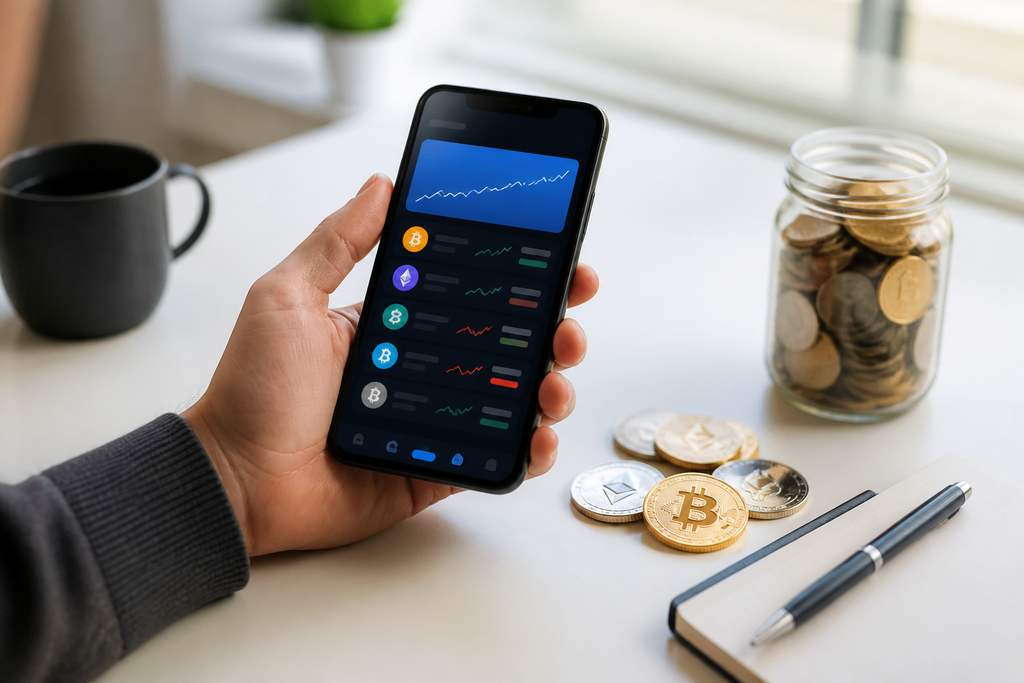
Mobile crypto usually means cryptocurrency activity handled primarily through a phone: buying and selling in an exchange app, storing coins in a mobile wallet, sending payments by scanning a QR code, or interacting with blockchain apps through a browser built into the wallet. The term sounds simple, but the cost picture is not. A small purchase made on a phone can involve a trading spread, a card processing fee, a blockchain network fee, a withdrawal fee, and sometimes a hidden conversion charge if the app moves between currencies behind the scenes.
That makes the practical question less about the device and more about the stack of services behind it. A phone is only the interface. The money moves through payment rails, custodians, wallet software, and blockchains, each with its own pricing logic. For anyone comparing mobile options with buying intent, the useful way to read the market is to separate convenience fees from unavoidable network costs and to see which charges appear only when funds leave the app.
What is mobile crypto in everyday use
In everyday use, mobile crypto falls into three broad setups. The first is a custodial exchange app, where the company holds the assets and the user logs in with email, password, and identity checks. The second is a self-custody mobile wallet, where the user controls the recovery phrase and signs transactions directly on the phone. The third is a hybrid app that offers both exchange functions and wallet functions in one interface.
Those setups matter because fees attach to different actions. A custodial app often makes buying easy with bank cards or instant bank transfers, but that convenience can add payment processing costs and a spread on the quoted price. A self-custody wallet may be free to install and free to hold assets in, yet every on-chain move requires a network fee. Hybrid apps can charge in both places: a spread when buying and a separate fee when withdrawing to a public blockchain address.
Where mobile crypto fees actually come from
The first cost is the purchase method. Card purchases are often the most expensive because card issuers, fraud controls, and payment processors all take a cut. Bank transfers are usually cheaper, though they can be slower or limited by region. Some apps also use third-party payment providers inside the app, which means the headline brand may not control the final fee shown at checkout.
The second cost is the trading spread or commission. Some mobile apps show a simple all-in price rather than a separate trading fee. That can look clean, but it makes comparison harder because the difference between market price and execution price may be wider than on a full exchange order book. Other apps charge an explicit commission and let the market spread remain visible. Neither model is automatically better; what matters is the total paid.
The third cost is blockchain settlement. Sending bitcoin, ether, stablecoins, or tokens from one wallet to another requires a network fee paid to miners or validators, not to the app. On busy networks, that fee can become the dominant cost for small transfers. Some apps estimate the fee and let the user choose slow, standard, or fast confirmation. Others bundle the estimate into one send screen and offer little control.
People trying to answer what is mobile crypto often discover that the app itself is only one layer of the bill, and the expensive part may be the payment rail or the blockchain chosen for settlement.
How app type changes the cost structure
The main takeaway from this comparison is that the cheapest mobile setup depends on the action being taken, not on the app store description.
| Mobile setup | Main cost pattern | Best fit |
|---|---|---|
| Custodial exchange app | Spread or trading fee plus payment method fee | Buying with fiat |
| Self-custody wallet | Network fee on each on-chain action | Holding and direct transfers |
| Hybrid app | Purchase costs plus possible withdrawal fee | All-in-one convenience |
| Broker-style app | Simplified quote with embedded spread | Small instant buys |
A custodial exchange app usually wins on entry cost when funded by bank transfer and used with limit orders, if the app supports them. A self-custody wallet becomes efficient after the assets are already on-chain and the user only needs occasional transfers. A hybrid app can save time, but convenience often means paying for both brokerage and settlement in one place.
Hidden charges that make small mobile buys expensive
Small purchases get hit hardest by fixed or semi-fixed charges. If an app applies a minimum transaction fee, a modest card buy can carry a high effective percentage cost. Even without a fixed fee, a wide spread on a small market order can be material. Then, if the asset is withdrawn immediately to a private wallet, the withdrawal or network fee can consume another noticeable share.
Currency conversion is another common leak. A user may fund an account in one fiat currency, buy a crypto pair quoted against another, and then sell or withdraw into a different base currency later. Each conversion can carry its own spread. This is especially relevant in mobile apps aimed at international users, where the same interface serves many local banking systems.
There is also the cost of urgency. Mobile design encourages quick actions: tap to buy, tap to send, tap to swap. Fast actions often mean accepting the default quote and the default network fee. On chains where fees fluctuate, waiting for a quieter period can lower the cost of moving funds. On trading apps, using a market order during volatile conditions can produce worse execution than expected from the preview screen.
Network choice matters more than many mobile users expect
Two transfers of the same dollar value can have very different costs depending on the blockchain used. Bitcoin fees depend on block space demand and transaction size in bytes. Ethereum fees depend on network demand and the complexity of the transaction. Stablecoins add another layer because the same token may exist on several networks, each with different fee behavior and wallet support.
This matters on mobile because many apps present tokens first and networks second. A user may think only about sending a stablecoin, not about whether it moves on Ethereum, Tron, Solana, or another chain. The wrong network choice can mean a higher fee, slower support from the receiving platform, or a recovery problem if the destination does not support that network. Cheap transfer networks can reduce costs sharply, but only if both sides support them.
For mobile traders who plan to move funds often, network selection can matter more than the trading commission. For long-term holders who buy once and leave assets in place, the purchase spread may be the bigger issue.
Security features can add cost, but sometimes save money
Security in mobile crypto is not free. Some apps charge for instant card purchases partly because fraud risk is higher on reversible payment methods. Stronger identity checks can slow onboarding, but they may unlock cheaper bank transfer routes and higher account functionality. On the self-custody side, buying a hardware wallet to pair with a phone adds an upfront cost, yet it may reduce the risk of a loss that no fee comparison can offset.
There is also a practical cost to poor security design. If a user stores funds in an app with weak backup practices and loses access, recovery can be difficult or impossible. If a wallet app makes network selection unclear, a mistaken transfer can create support costs, delays, or unrecoverable funds. A slightly higher fee on a clearer, better-supported app can be rational if it reduces operational errors.
The cheapest mobile crypto path depends on the next step
The concrete takeaway is to choose the mobile route based on what happens after the purchase. If the goal is to buy and hold without moving funds soon, compare the all-in buy price across apps and funding methods, with bank transfer usually worth checking before card. If the goal is to send coins out, look first at withdrawal policy and network options, because that later step may cost more than the buy itself. If the goal is frequent trading, a mobile app with visible order books and explicit fees is often easier to price than a simplified broker quote.
Before pressing buy, check four items in order: funding method fee, spread or commission, withdrawal policy, and network used for any transfer. That sequence reveals where the real cost sits. In mobile crypto, the phone makes the process look compact, but the bill is assembled across several layers, and the cheapest-looking tap is often not the cheapest route.