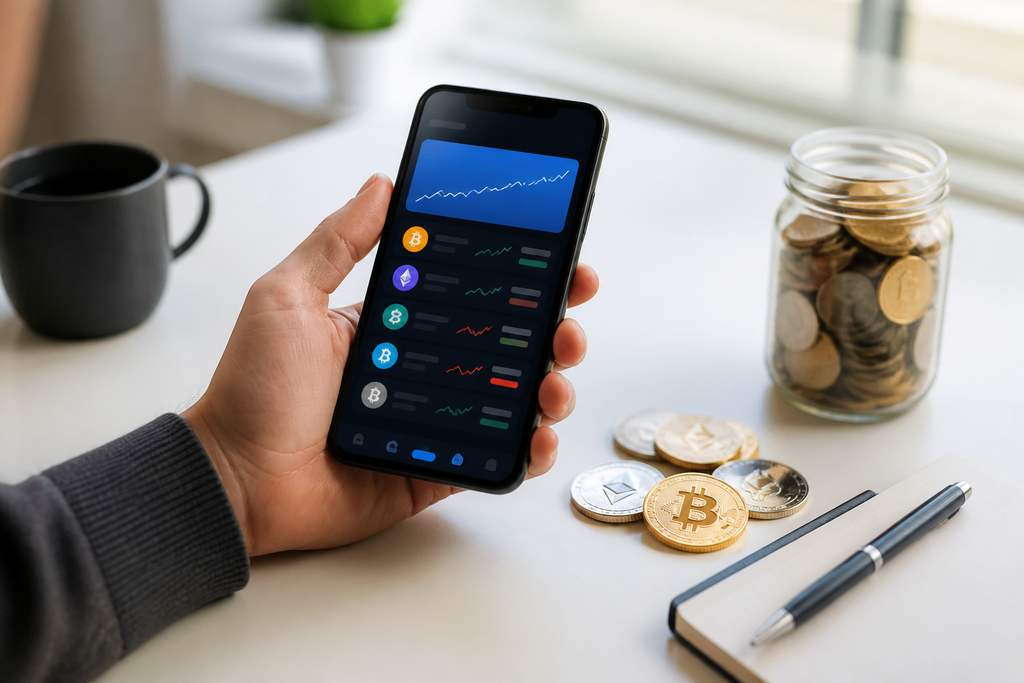
People searching for politically branded tokens often run into the same problem: the name spreads faster than the facts. A coin can trend on social media, appear in wallet screenshots, and show up on price trackers before many buyers have worked out who issued it, what chain it uses, or whether it has any official connection to the person in the name. That gap between attention and verification is where most costly mistakes happen.
The safest way to approach a token tied to a public figure is to treat branding as unproven until it is confirmed by primary sources. With a topic like official Trump crypto, confusion usually comes from copycat tickers, fake contract addresses, unofficial exchange listings, and assumptions that political branding means legal endorsement. The practical task is less about hype and more about checking identity, custody, and execution before any money moves.
What is official trump crypto in practical terms
The phrase usually refers to a cryptocurrency project that claims a formal connection to Donald Trump or his business and political brand. In practice, that is not a technical category. Blockchains do not mark a token as official. Exchanges do not create legitimacy by listing it. The only meaningful signals are off-chain: statements from verified channels, documentation from the project team, and a contract address that remains consistent across reputable sources.
This is where many buyers make the first mistake. They assume that a familiar name on a trading app proves authenticity. It does not. A token name can be copied, a ticker can be similar to another ticker, and a search result can lead to an unofficial project that was designed to catch impulsive traffic. The right question is not whether the name looks right, but whether the exact contract address can be traced back to a source that the claimed issuer actually controls.
The first expensive mistake is trusting the token name instead of the contract
On decentralized exchanges and some wallets, many assets can share similar names. A buyer may search “Trump,” see several matches, and pick the one with the most recent activity or the most eye-catching logo. That is a weak filter. Smart contracts, not names, define the asset. If the contract address is wrong, the purchase is wrong even if the ticker looks perfect.
The safest workflow is simple: find the contract address from an official project page or a verified announcement, then match it exactly in the wallet or exchange interface. A single wrong character means a different token. Contract verification on a block explorer can add confidence, but it still does not replace source verification. A verified contract only shows that code was published and matched; it does not prove the branding claim behind the token.
Readers trying to sort rumor from source often start with broader explainers, and the question what is official trump crypto usually matters most when it is paired with the contract address and the chain name, not with headlines or hashtags.
Chain confusion causes failed transfers and stranded funds
A second common mistake is buying or withdrawing on the wrong network. Tokens can exist on Ethereum, Solana, BNB Chain, or another network, and exchanges sometimes support deposits and withdrawals on only certain chains. If someone buys a tokenized asset on one network and sends it to an address or wallet setup meant for another, recovery may be difficult or impossible.
The error often starts with an assumption that a wallet address is universal. Some addresses look similar across networks, and some wallets display multiple chains in one app, which can create false confidence. Before sending anything, the buyer needs to confirm three things together: the token contract, the network, and whether the receiving wallet actually supports that asset on that network. Sending a test amount first is slower, but it is cheaper than trying to recover a full transfer that never arrives.
Gas mechanics matter here too. A token may sit in a wallet, but moving it often requires the native coin of that network for fees, such as ETH on Ethereum or SOL on Solana. New buyers sometimes spend their full balance on the token and leave nothing for the transfer fee. The result is a wallet that holds the asset but cannot move it until more native currency is added.
Where buyers go wrong on exchanges and wallets
Most losses are not caused by advanced trading errors. They come from choosing the wrong venue or misunderstanding what the venue actually controls. The comparison below shows the basic tradeoffs a buyer should understand before using an exchange app, a software wallet, or a hardware wallet.
| Option | Main advantage | Main risk |
|---|---|---|
| Centralized exchange | Simple buying flow | Custody held by platform |
| Software wallet | Direct token access | Seed phrase exposure |
| Hardware wallet | Stronger key isolation | More setup complexity |
| Decentralized exchange | Broad token availability | Fake token listings |
A frequent mistake is assuming that buying on a centralized exchange means the buyer owns the asset in a self-custody sense. Often the platform is holding it on the buyer’s behalf until withdrawal. That may be acceptable for small amounts or short-term trading, but it changes the risk profile. Another mistake is moving too quickly into self-custody without understanding seed phrase handling. A fake wallet app, a phishing page, or a cloud backup of a seed phrase can destroy the security benefit of self-custody in one step.
Political branding does not remove market and legal risk
When a token uses the name of a public figure, some buyers read that as a sign of permanence or protection. That is a category error. A politically branded asset can still be highly volatile, thinly traded, or dependent on short bursts of attention. It can also face disputes over naming, promotion, or jurisdiction. None of those risks disappear because the branding feels familiar.
Another mistake is reading social engagement as proof of liquidity. A token can trend online while order books remain shallow or decentralized liquidity remains narrow. That matters at the moment of sale. A position that looked easy to enter can become costly to exit through slippage, wide spreads, or delayed execution. Buyers should check actual market depth and the trading venue’s withdrawal conditions instead of relying on screenshots of gains posted by other traders.
Tax treatment is another area where assumptions create trouble. In many places, swapping one crypto asset for another, selling for fiat, or using crypto to buy something can trigger a taxable event. A buyer who jumps between wallets and exchanges without records may later struggle to reconstruct cost basis, dates, and proceeds. The fix is boring but effective: save confirmations, transaction hashes, and notes on why each transfer happened.
A safer process for avoiding scams, slips, and rush decisions
The cleanest way to avoid most mistakes is to slow the sequence down. First, confirm whether there is a genuine official source at all. Second, copy the contract address from that source and match the chain. Third, verify that the chosen exchange or wallet supports that exact asset on that exact network. Fourth, keep enough native coin for fees. Fifth, test with a small transfer before sending the full amount. Each step removes a different class of error.
It also helps to separate speculation from verification. If the goal is a short-term trade, the buyer still needs to know whether the market has real liquidity and whether the venue allows prompt withdrawal. If the goal is a longer hold, custody matters more than convenience, and seed phrase discipline becomes central. In both cases, the biggest avoidable loss usually comes from acting on a name before confirming the asset behind it.
The concrete takeaway before buying any Trump-branded token
Do not buy the first asset that matches the headline. Write down the exact contract address, the exact network, the exact venue, and the exact custody plan before placing an order. If any one of those four points is unclear, stop and verify it from a primary source. That single habit prevents most fake-token purchases, wrong-chain transfers, and panic-driven trades tied to official-sounding branding.