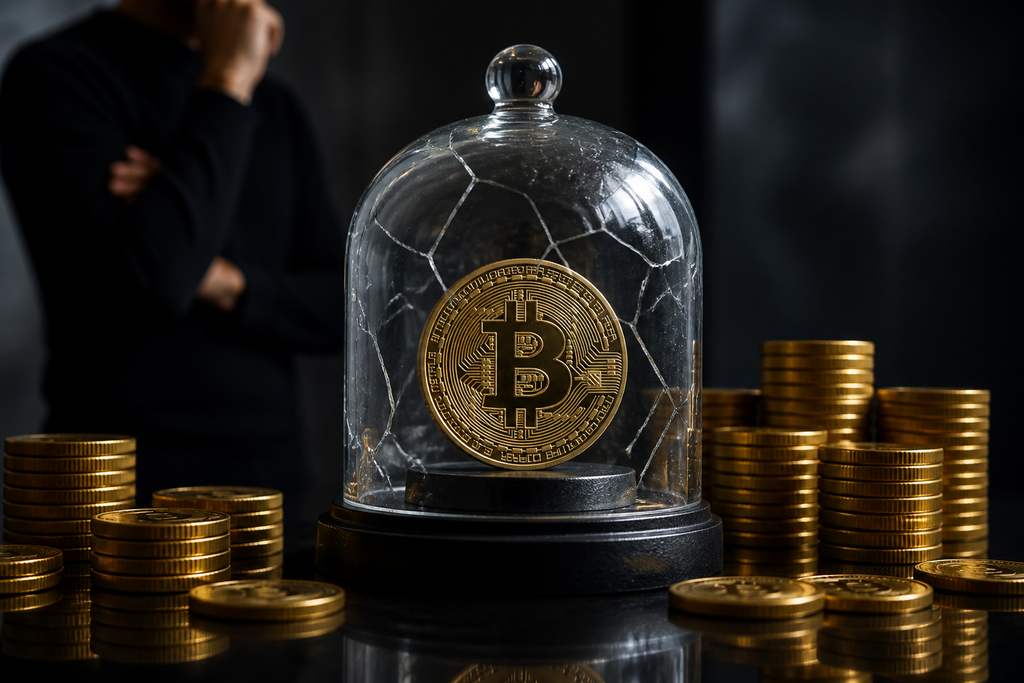
For cautious beginners, staking on Coinbase is best understood as a way to help secure certain proof-of-stake blockchains while potentially earning protocol rewards. In practice, Coinbase acts as a middle layer: it handles the technical steps, tracks your position, and passes through rewards after taking its own service fees and any network-related costs it discloses.
The main appeal is convenience. The main risk is that convenience can hide important tradeoffs, especially around price volatility, lockup rules, and the fact that staking is not the same as holding cash or a guaranteed-yield product. If the goal is to buy and hold with less technical friction, Coinbase can be a practical entry point, but only if the user understands what is being delegated, what can change, and what cannot be reversed instantly.
What is staking crypto coinbase and how Coinbase fits in
At a basic level, staking means locking or delegating crypto to support a blockchain that uses proof of stake instead of proof of work. Those networks rely on validators to confirm transactions and keep the chain honest. In return, participants may receive rewards paid by the network.
Coinbase simplifies that process for retail users. Rather than setting up validator software, managing uptime, and handling slashing risk directly, a customer can use the Coinbase interface to stake supported assets through the platform. That convenience matters for beginners, but it also means Coinbase, not the user, is doing most of the operational work.
For readers looking for a plain-language reference on the broader concept, what is staking crypto coinbase is often discussed in the same context as other beginner crypto questions because the platform model turns a technical process into a custodial service.
Why cautious beginners prefer the platform route
The safest reason to use Coinbase for staking is not higher returns; it is lower operational complexity. A beginner does not need to choose a validator, monitor node performance, or manage private staking infrastructure. The platform packages those tasks into a familiar account interface.
That convenience can reduce mistakes, especially for users who might otherwise send assets to the wrong network, misconfigure wallets, or forget the conditions attached to a staking protocol. For a first-time user, fewer moving parts usually means fewer ways to make an irreversible error.
There is still a tradeoff. When staking through a custodial exchange, the user accepts platform risk. That includes account restrictions, service outages, policy changes, and any delay that comes from Coinbase’s own handling of staking requests or unstaking queues. The assets may be yours economically, but the operational control is not fully yours.
Key safety tradeoffs before staking on Coinbase
Staking is often marketed as passive income, but cautious users should treat it as a locked investment in a volatile asset. Rewards may be earned in the staked asset, yet the market value of that asset can fall faster than rewards accumulate. That means the headline yield may look attractive while the actual outcome remains negative.
Another major risk is liquidity. Some assets can be unstaked relatively quickly, while others may involve delays set by the underlying network or by the platform’s own process. During that time, the asset can still move in price, and the user cannot always exit instantly.
There is also slashing risk on some networks. Slashing is a penalty applied when a validator misbehaves or fails to meet network rules. Coinbase may try to manage that risk for users, but it cannot remove the underlying protocol mechanics entirely. Beginners should assume staking always comes with technical and market risk, even when the interface looks simple.
| Option | Control | Complexity | Main risk |
|---|---|---|---|
| Coinbase staking | Custodial | Low | Platform and liquidity risk |
| Self-staking | User-controlled | High | Setup errors and slashing |
| Holding without staking | User-controlled | Low | No staking rewards |
Which assets and account conditions matter most
Not every coin on Coinbase can be staked, and the rules can differ by asset. Some networks support flexible unstaking, while others have protocol-level delays. Coinbase may also restrict staking availability by jurisdiction or account status, so the same feature can look different depending on where the user lives and how the account is verified.
Fees and reward treatment also deserve attention. Coinbase usually discloses that it takes a commission from staking rewards, but the exact economics can vary by asset and product terms. A cautious beginner should read the current disclosure page before staking any amount, because the net reward is what matters, not the gross reward shown in promotional material.
Another practical issue is taxes. In many places, staking rewards can be taxable when received or when they become available, depending on local rules. Coinbase’s interface does not remove that obligation. Anyone staking for the first time should assume records will matter later and keep track of dates, amounts, and reward payouts.
How to reduce mistakes before clicking stake
The safest approach is to start with a small amount and treat the first staking decision as a test of the process, not a commitment to a long holding period. A small trial helps confirm where rewards appear, how unstaking works, and whether the user is comfortable with the interface.
- Check whether the asset is supported for staking in the account’s jurisdiction.
- Read the current reward and fee disclosure for that specific asset.
- Confirm how long unstaking or redemption may take.
- Use only funds that are not needed for short-term spending.
- Keep account security strong with unique passwords and two-factor authentication.
Security still matters even when Coinbase handles the validator side. A compromised exchange account can expose staking positions the same way it can expose other balances. Strong login hygiene is part of staking safety, not separate from it.
Where staking on Coinbase fits in a beginner portfolio
For a cautious user, staking should usually be a small part of a broader plan. It makes more sense for assets already intended for medium- to long-term holding than for money that may be needed soon. If the user would be unhappy seeing the asset fall 30% while locked or pending unstake, that asset is probably not a good staking candidate.
Staking also should not be confused with a savings account. There is no deposit insurance, no fixed principal, and no promise that rewards will offset price swings. The safest mindset is to view staking as an optional network participation feature with compensation, not as a low-risk yield product.
For beginners who want simple exposure to crypto and are comfortable with custodial risk, Coinbase can be a sensible place to start. For users who value direct control above convenience, self-custody may be better even if it is more complex.
A practical first step for safety-focused users
The best first move is to choose one supported asset, verify the current staking terms, and stake only a small amount that would not cause stress if access were delayed. That keeps the decision reversible from a financial-planning perspective even if the blockchain itself is not instantly reversible.
If the process feels unclear, pause and learn the asset-specific rules before committing more. In staking, caution is not hesitation; it is how beginners avoid turning a simple yield feature into an avoidable loss.