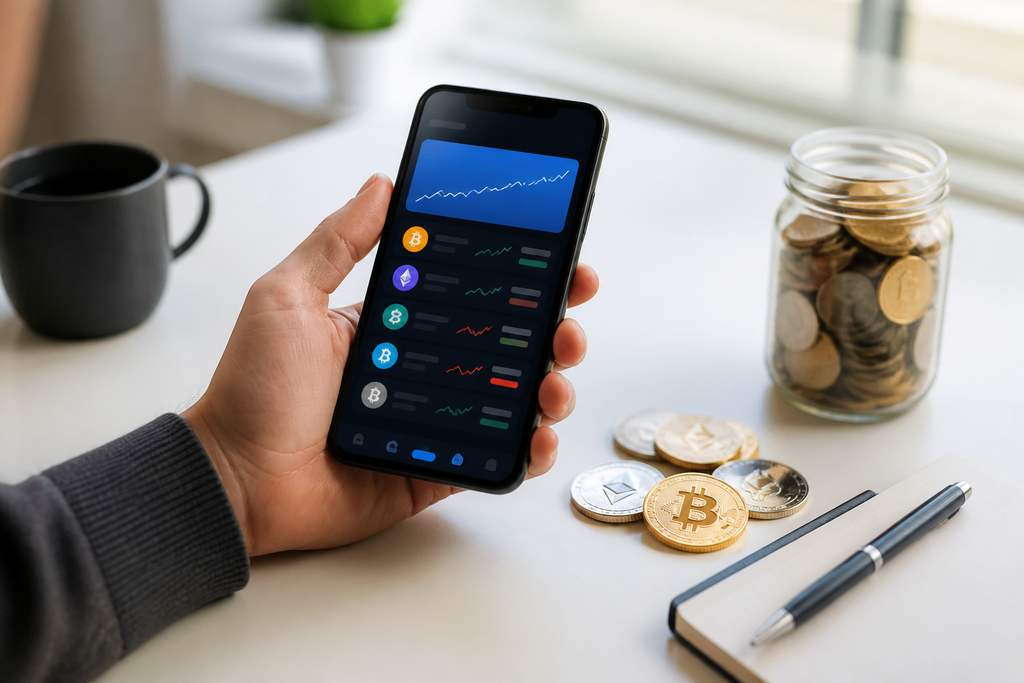

For a cautious beginner, the best crypto investment is rarely the coin with the loudest marketing or the fastest recent gains. A safer starting point usually means focusing on assets with deep liquidity, long operating histories, broad exchange support, and simple use cases that can be explained without hype. That narrows the field quickly.
The harder truth is that there is no single correct answer to what is the best crypto to invest in, because risk tolerance matters more than ticker symbols. Someone trying to preserve capital will judge “best” differently from someone chasing outsized returns. For beginners with a safety-first mindset, the useful question is which crypto offers the clearest balance between durability, access, and manageable risk.
What cautious beginners should mean by “best”
In crypto, “best” should not mean “most likely to multiply quickly.” That frame pushes beginners toward small tokens with thin trading, weak governance, or narratives that change every few months. A safer definition starts with survivability: can the asset still attract buyers and sellers during stress, can it be stored in reputable wallets, and is it listed on regulated or well-known exchanges?
That is why market position and liquidity matter so much. A coin that trades across many large venues is usually easier to enter and exit than one mainly traded on a single offshore exchange. Higher liquidity can reduce slippage, which means the executed price stays closer to the quoted price. For beginners making modest purchases, that practical detail matters more than speculative upside claims.
Another part of “best” is operational simplicity. Assets with straightforward custody options, well-supported wallet software, and clear transaction histories are easier to handle safely. Complexity creates room for expensive mistakes, especially when users are new to seed phrases, network fees, or moving funds between chains.
Bitcoin and Ethereum are usually the first serious candidates
From a safety-first perspective, Bitcoin and Ethereum are often the first two assets worth considering. They are not “safe” in the way insured bank deposits are safe, but they tend to offer advantages that many smaller tokens do not: long track records, broad infrastructure support, deep liquidity, and stronger public scrutiny.
Bitcoin is often treated as the simplest crypto thesis. Its core use case is relatively narrow and easy to understand: a scarce digital asset with a fixed issuance schedule. That simplicity is one reason cautious investors often start there. It has fewer moving parts than many application-focused networks and less dependence on promises about future features.
Ethereum has a different profile. It is more central to on-chain applications, stablecoins, and token issuance, which gives it wider utility but also more complexity. For beginners, that means Ethereum may be easier to justify as infrastructure, yet harder to evaluate cleanly. Network fees, upgrades, and the larger application ecosystem all affect how newcomers experience it.
How major crypto options compare for a safety-first buyer
The main takeaway from this comparison is that “safer” in crypto usually means larger, more liquid, and easier to custody rather than more exciting.
| Asset | Safety-first strength | Main caution |
|---|---|---|
| Bitcoin | Longest track record, strong liquidity | Still highly volatile |
| Ethereum | Broad utility, deep exchange support | More complex ecosystem |
| Large-cap altcoins | Established exchange listings | Higher project-specific risk |
| Small-cap tokens | Potential upside narrative | Thin liquidity, failure risk |
For a beginner trying to reduce avoidable risk, this table points toward a simple rule: staying near the top of the market by liquidity and infrastructure support generally lowers operational risk, even though it does not remove price risk. That distinction is worth keeping clear. A large asset can still fall sharply, but it is less likely to become impossible to sell or impossible to store in reputable software.
Why smaller coins usually fail the beginner safety test
Many newer investors are drawn to low-priced tokens because they appear cheaper than Bitcoin or Ethereum. That impression is misleading. The number of units owned says little about value or risk. A token priced at a fraction of a dollar can still be more expensive in valuation terms than a much higher-priced coin, and it can be dramatically riskier.
Smaller coins often depend on narrow communities, concentrated ownership, or a single product narrative. If exchange support weakens, developer activity slows, or the project treasury comes under pressure, liquidity can dry up quickly. That leaves beginners exposed to losses that have little to do with the broader crypto market and much more to do with project survival.
Educational resources can help frame those tradeoffs. On sites that answer beginner questions, including what is the best crypto to invest in, the safer pattern is usually the same: start by understanding market structure and custody before taking on extra token-specific risk.
There is also a behavioral problem. Beginners who buy speculative tokens often feel pressure to monitor social media constantly because the thesis is fragile and sentiment-driven. That is the opposite of a safety-first approach. A cautious investor should be able to hold an asset based on durable reasons, not on the latest influencer thread.
Custody and exchange choice matter almost as much as the coin
Even a relatively established asset can become a bad investment experience if it is bought on a poor platform or stored carelessly. Exchange risk, withdrawal restrictions, and weak account security have harmed investors more than many people expect. For that reason, “best crypto” cannot be separated from “best way to buy and hold it.”
Beginners who value safety usually do better with a well-known exchange that supports strong account protections such as app-based two-factor authentication, address allowlisting where available, and transparent withdrawal processes. After purchase, long-term holders often move funds to a non-custodial wallet so they control the private keys. That adds responsibility, but it reduces dependence on an exchange remaining solvent and accessible.
Bitcoin and Ethereum benefit here because they are supported by many reputable wallets and hardware devices. That broad support makes it easier to build a conservative custody setup. By contrast, some smaller tokens require niche wallets, custom network settings, or bridge transactions, each of which increases operational risk.
Position sizing is the real safety tool for beginners
The safest choice in crypto is often not picking the “perfect” asset but controlling how much capital is exposed. Even Bitcoin can fall hard over short periods. A beginner who allocates too much can turn a manageable correction into a forced sale. Small position sizing protects against that mistake far better than trying to predict the next market move.
For cautious investors, a limited allocation to one or two major assets is usually easier to manage than a basket of speculative coins. It simplifies tax records, storage, and rebalancing decisions. It also lowers the chance of making errors during transfers or panic-switching between tokens after price swings.
Regular purchases over time can also reduce the pressure of buying all at once. That does not guarantee profit, but it spreads entry points and may help beginners avoid emotional timing decisions. The key is consistency and restraint, not trying to outsmart volatility.
A concrete starting plan for what is the best crypto to invest in
If the goal is a cautious first step, the strongest default answer is Bitcoin, with Ethereum as a reasonable second option for those comfortable with a bit more complexity. That does not mean either asset is low risk in absolute terms. It means they usually offer the clearest mix of liquidity, infrastructure, and staying power available to beginners.
A practical plan is simple: choose one reputable exchange, enable strong account security, start with a small amount that would not damage personal finances if it fell sharply, and limit the first purchase to Bitcoin or at most Bitcoin plus Ethereum. Once that process is familiar, the next decision should be custody, not a search for exotic tokens. For a safety-first beginner, restraint is the investment edge.