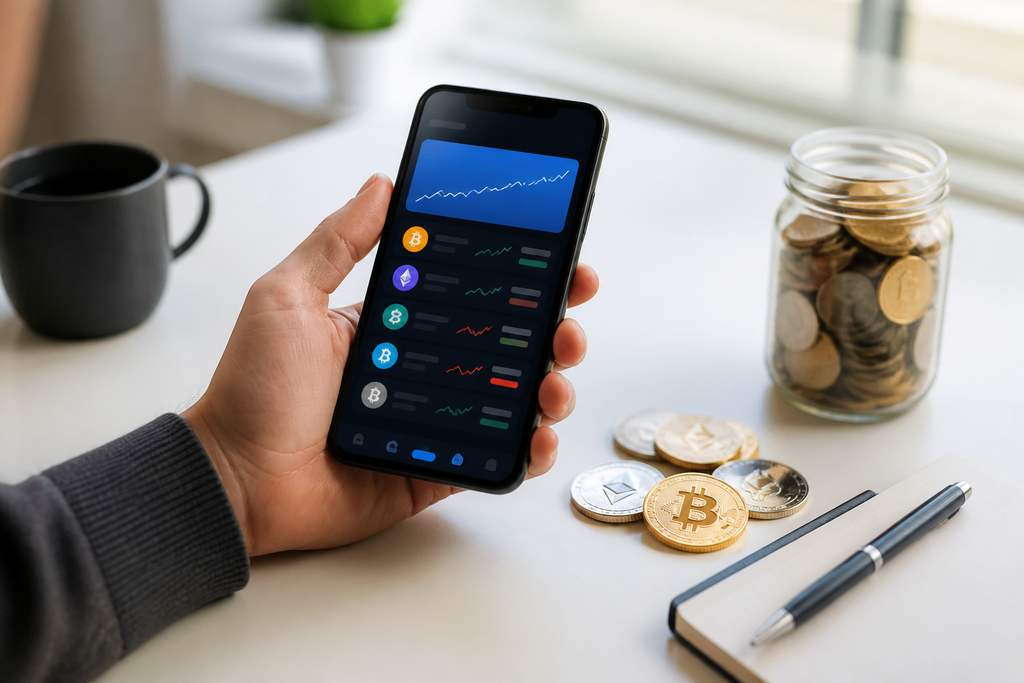

There is no fixed answer to what counts as the newest crypto coin, because tokens go live continuously. On an ordinary day, dozens of new pairs are created across Ethereum, its layer 2 networks, Solana, and BNB Chain. Trackers such as CoinMarketCap, CoinGecko, and DEX Screener keep “new” or “recently added” lists, but each applies its own filter: some list a token only after its pool reaches a liquidity threshold, others the moment the pool exists. A token topping one list may not appear on another for hours.
Most people asking the question want to buy, and that is where the quoted price misleads. A token trading at $0.0004 does not cost $0.0004 to acquire. Launch-stage purchases carry gas, approval transactions, price impact, slippage, spreads, and eventually exit costs, and on small orders these can exceed the value of the tokens themselves. This breakdown follows each fee as it appears, from launch mechanism through to the sale.
What is the newest crypto coin often costs more than its listing price
The first printed price of a new token is set by whoever seeded its liquidity pool, and it reflects the creator’s chosen ratio rather than any market consensus. Trackers display the price of the last executed trade, but on a thin pool the next trade can print something quite different, because every buy shifts that ratio. The gap between the displayed price and the executable price is price impact, and it is a real cost even though no exchange bills it as a fee. Early buyers pay it twice — once entering and once exiting — since selling into the same thin pool pushes the price down in exactly the same way.
Where the first fees appear: launchpads, presales, and fair launches
New coins reach the market through three main routes, and each embeds costs differently. Launchpads charge projects a platform fee and often take a share of funds raised; projects recover this through tokenomics, usually by allocating a slice of supply to the platform, which dilutes anyone who buys later. Presales sell tokens below the intended listing price, but that discount is compensation for lockups and failure risk — allocated tokens often unlock on schedules, and a meaningful share of presales never reach a working market at all. Fair launches skip intermediaries and let anyone buy from the first block, but they shift the cost into risk: the fee line disappears, while hidden contract mechanics, unlocked liquidity, or trading restrictions become ways to lose the entire position. Gas to mint or participate applies in all three cases.
Decentralized exchange costs on a coin that is hours old
Identifying a genuinely fresh pair is itself a filtering task. A crypto FAQ hub that ranks what is the newest crypto coin by launch date will name a different token than one sorted by trading volume or trend score, and presale directories will name a third. Cross-checking two independent trackers takes minutes and prevents paying gas for a contract that is days old, or worse, a copycat deployed to imitate one.
Once the token is identified, the swap involves two on-chain transactions on EVM networks: an approval granting the decentralized exchange permission to spend the token, and the swap itself. The approval is one-time per token per wallet but still costs gas. The buyer also sets a slippage tolerance — the maximum acceptable difference between quoted and executed price. Setting it high gets the transaction through but invites sandwich attacks, where a bot front-runs the buy, raises the price, and sells immediately after, pocketing the difference. On thin pools this bot tax can dwarf every other fee combined.
Chain choice dominates the gas line item. The table below compares where brand-new tokens typically appear first.
| Network | Swap cost level | Early liquidity | Practical trade-off |
|---|---|---|---|
| Ethereum mainnet | Highest gas per trade | Deepest pools for notable launches | Pay more per trade for depth |
| Layer 2s (Base, Arbitrum) | Usually cents | Thinner pools, possible bridge step | Cheap gas, occasionally less depth |
| Solana | Fractions of a cent | Dense, fast early trading | Congestion spikes during hype |
| BNB Chain | Low | Very active launch scene | Cheap trades, frequent rug pulls |
Centralized listings: trading fees, spreads, and launchpad catches
By the time a new coin lists on a major centralized exchange, it is usually days or weeks old, but listing resets its cost structure. Spot trading fees are charged per fill, generally well under one percent at base tiers, reduced for high volume or for paying in the exchange’s own token. On a freshly listed pair the explicit fee is often the smaller cost: the order book is thin in the first hours, the spread between best bid and ask widens, and market orders cross that spread immediately. Withdrawal fees apply when moving the asset to self-custody, and those are fixed per token regardless of amount, which penalizes small balances.
Exchange launchpads and launchpools add another layer: allocation in new listings is often earned by staking the exchange’s token or other assets for a set period. No fee appears on paper, but the lockup is an opportunity cost, and staking capital in one volatile token to earn allocation of an unproven one concentrates risk on a single platform.
Costs that arrive after the purchase
Moving a new token to a self-custody wallet triggers a network fee, and storing it properly means a hardware wallet, a one-time cost in the tens of dollars. Tax treatment matters more than most buyers expect: in many jurisdictions swapping one token for another is a taxable disposal, so buying the newest coin with an existing holding can create a reportable event, and tracking those swaps across chains demands paid software or patient records. Approvals also linger — every permission granted to a decentralized exchange stays live until revoked, and revoking costs gas. The largest “fee” in the category is outright loss: honeypot contracts that block selling, liquidity that is pulled minutes after the hype, and fake contract addresses shared in launch chats are costs that never appear on any fee schedule.
Tallying the full stack before committing money
A concrete rule follows from how these costs behave. Fixed costs — gas, approval, withdrawal — do not scale with order size, while proportional costs — price impact, slippage, spread, trading fees — do. The smallest purchases therefore suffer the worst ratios: a buy small enough that gas dominates can lose a double-digit percentage to fixed fees alone on an expensive network, while the same buy on a low-fee chain loses almost nothing to gas but may face proportionally worse price impact in a shallow pool.
Before buying any token launched within the last day, run the exit math first. Estimate the gas and price impact of selling the full position, add the entry-side costs, and compare the total against the smallest price move that would make the trade worthwhile. If selling costs more than a realistic favorable move, the position cannot win no matter what the token does. Match venue to size: small speculative buys belong on cheap networks or centralized exchanges with low fixed costs, and only larger orders justify paying mainnet-level gas for pool depth.