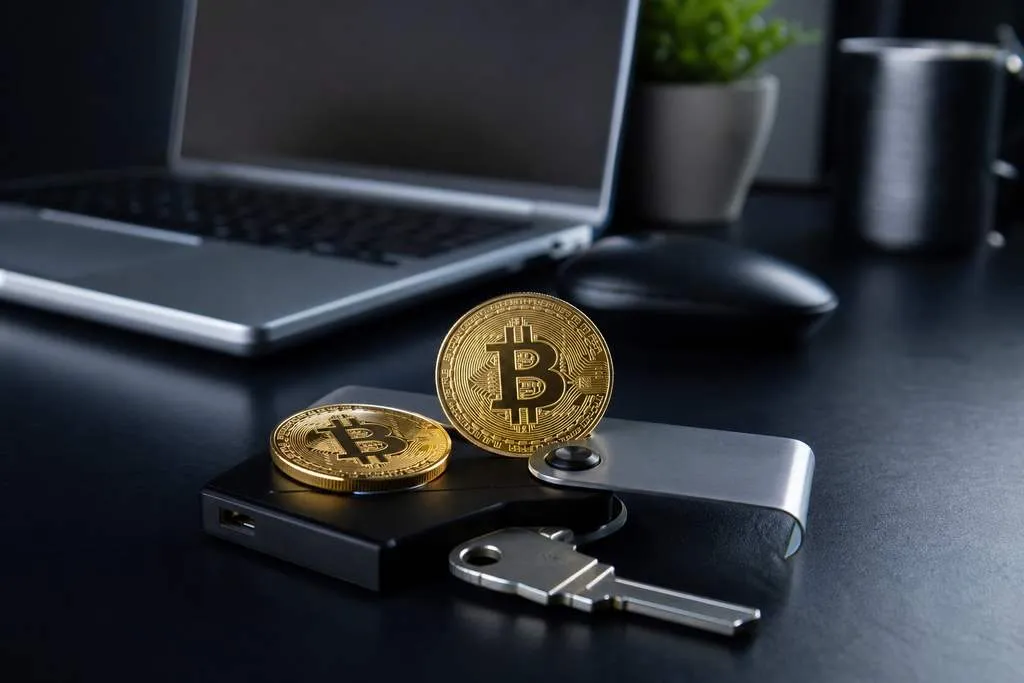
A crypto wallet never actually holds your coins. The blockchain holds them; the wallet holds the private keys that authorize moving them, and that distinction drives every cost you will ever pay in crypto. Where those keys live — on an exchange’s servers, in a phone app, or on a dedicated offline device — determines who charges you, when, and how much. The fee differences between these options are larger than most beginners expect, and they compound over years of holding and trading.
This article breaks down the cost side of wallet ownership: the network fees nobody can waive, the less visible charges built into custodial exchange accounts, the one-time price of hardware devices, and the practical moves that keep the total down. The aim is a budget you can sketch before moving any coins anywhere.
What is the point of a crypto wallet once fees enter the picture
The wallet’s core job is signing. It takes your private key, constructs a transaction, and produces the cryptographic signature that proves you own the funds being spent. Broadcasting that transaction to the network is free — nodes relay it without charge — but the signature itself decides which fee system you face. If an exchange holds the keys, the exchange signs, and you never see the raw network fee because it is folded into the exchange’s own fee schedule. If you hold the keys, you sign yourself, pay the network directly, and choose how much to attach.
That choice is where savings live. Overpaying guarantees fast confirmation; underpaying risks a transaction that sits unconfirmed until the network clears. A custodial account gives you none of this control, which is precisely why its costs look simpler and often end up higher.
Network fees: the one cost no wallet can remove
Network fees go to the miners or validators who include your transaction in a block, never to the company that made the wallet. On Bitcoin, the fee depends on the transaction’s size in virtual bytes and on demand for block space at that moment, not on the amount being sent — moving $20 and moving $2 million can cost the same when both are ordinary single-signature transfers. During congested periods fees rise sharply; in quiet ones they can fall to cents.
Ethereum works on a gas model. A plain ETH transfer consumes a fixed amount of gas, but transferring an ERC-20 token consumes considerably more because the token’s contract has to execute, and approving a token for use with a smart contract is a separate paid transaction before you even swap. Since the EIP-1559 upgrade, each fee splits into a base fee that is burned plus a tip for the validator. Wallets present all of this as a speed-versus-price slider, but the underlying payment always goes to the network.
How custodial wallets charge you without calling it a fee
Holding crypto on an exchange costs nothing on paper, which is why so many people stay there. The charges appear at the edges. There is the spread between the buy and sell price, widest on one-click “instant buy” products and narrowest when you place limit orders on the exchange’s actual order book. There are trading commissions on every conversion between coins. And there is the withdrawal fee you pay when finally moving coins out — an amount the exchange sets itself, which can exceed the live network fee, particularly when the chain is quiet and the true cost has dropped.
Readers who arrived here still asking what is the point of a crypto wallet can find that question, alongside other beginner topics, answered in the site’s FAQ archive — worth a look before committing to a custody setup. The short version on cost: none of these charges is ever labeled a wallet fee, yet together they are exactly what custody costs you.
The real price tag on self-custody
Software wallets such as Electrum, Sparrow, MetaMask, and Rabby are free to download and free to hold in. Their developers monetize built-in swap integrations instead, taking a cut of in-app exchanges — often the most expensive way to trade, since the spread is baked into the quoted rate. A direct on-chain send from the same wallet costs only the network fee. Hardware wallets add a one-time device purchase; mainstream models from the major manufacturers generally run between roughly $50 and $200, with no subscription afterward and no per-signature charge, though you still pay network fees like anyone else. Backup gear is optional but sensible: paper is free, while stamped steel plates that survive fire and flood cost tens of dollars. Buy hardware directly from the manufacturer, since tampered resale devices are a known attack vector.
Self-custody has hidden costs too. ERC-20 tokens need ETH in the same wallet to pay gas, so a wallet full of tokens with an empty gas balance cannot move anything until funded. Interacting with a new smart contract usually means paying for a token approval first and the actual action second — two gas payments where a custodial account would show one flat trade fee.
Three wallet types, three cost structures
The table below condenses where the money actually goes under each custody model, so you can match the structure to how often you transact.
| Wallet option | Upfront cost | Where ongoing costs land |
|---|---|---|
| Custodial (exchange) wallet | None | Trading fees, buy/sell spreads, exchange-set withdrawal fees |
| Software wallet | Free download | Network fees on every send; extra spread on built-in swaps |
| Hardware wallet | Device purchase, typically $50–$200 | Network fees; optional accessories such as steel backups |
The pattern is that self-custody swaps recurring trading charges for per-transaction network payments plus a one-time device cost. Someone who trades weekly feels the exchange’s fee schedule heavily; someone who transfers coins twice a year mostly feels the device price and nothing else.
Practical ways to keep wallet costs down
Timing matters most on Bitcoin: sending during low-congestion periods can cut the fee by an order of magnitude compared with a busy stretch, and wallet fee estimates usually show you the trade-off directly. Batch withdrawals instead of moving coins in dribbles, since each send pays its own fee. On exchanges, use the spot order book rather than instant-buy screens, and check the withdrawal fee schedule before you even deposit — that single number is part of your real purchase cost. Do planned conversions on the exchange before withdrawing, rather than paying an in-wallet swap spread afterward. On Ethereum, keep a small ETH buffer for gas and grant token approvals only to contracts you intend to use repeatedly. Custom fee settings exist in most wallets, but as a beginner, stick to the wallet’s own estimates rather than hand-tuning.
What to budget before moving coins off an exchange
Concretely: plan for a one-time hardware outlay in the $50–$200 range if you want cold storage, an optional steel backup of a few tens of dollars, and a modest native-token buffer for gas — enough to cover several typical transactions on your main chain. Expect one network fee per transfer, anywhere from cents on quiet chains to tens of dollars on congested ones, and check your exchange’s withdrawal fee before buying there at all, since you will pay it the moment you leave. Against that budget, weigh the recurring drag of spreads and trading fees on a custodial account. A long-term holder making a handful of transfers a year will usually come out ahead with a hardware wallet and direct network fees; a frequent trader may genuinely get value from staying on an exchange’s order book and paying for the convenience. The point of the wallet, priced honestly, is choosing which of those two cost curves you sit on.