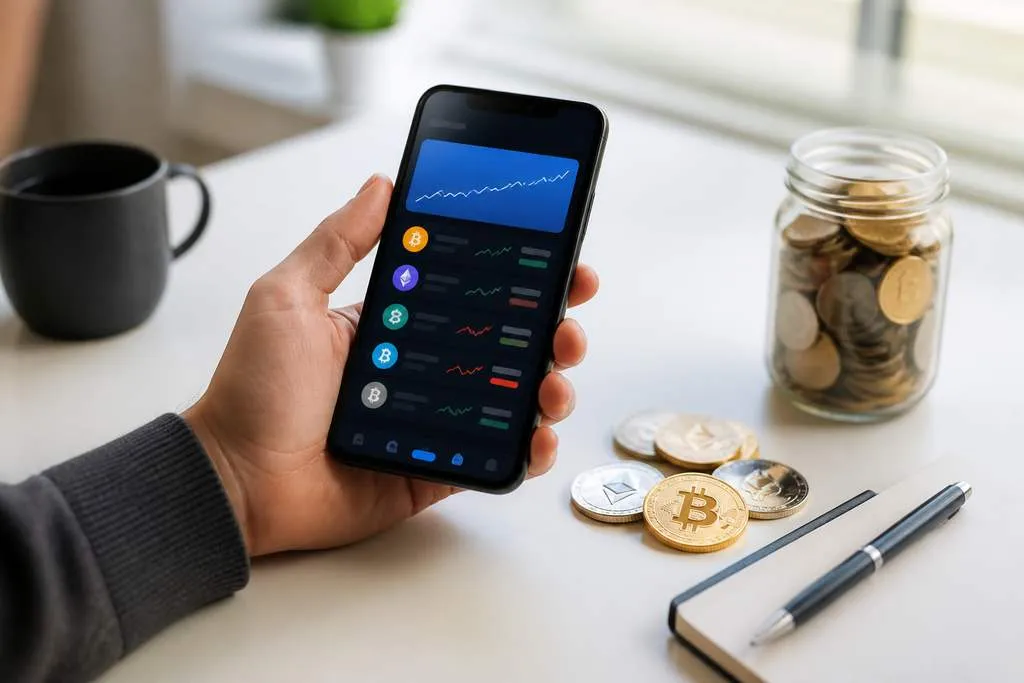
The phrase “safest crypto” bundles together two very different risks that need separate handling. The first is the risk that the asset itself loses most of its value or fails outright. The second is the risk that you lose access to money you still own — through an exchange collapse, theft, phishing, or a misplaced recovery phrase. Bitcoin and Ethereum anchor the safe end of the asset spectrum because they have survived multiple market cycles, trade with deep liquidity, and depend on no single company. Yet no coin is safe sitting on a venue that fails, and the best hardware wallet cannot stop a speculative token from going to zero.
The practical route to a safe setup is therefore a sequence of decisions made in order: pick established assets, pick a regulated venue, match custody to how much you hold and for how long, then close the operational gaps where people actually lose funds. The sections below walk through each step.
Step 1: Choose Assets with Long Track Records and No Issuer
At the asset level, relative safety comes from three things. The first is age through adversity: Bitcoin has operated continuously since 2009 and Ethereum since 2015, and both came through the 2018 and 2022 drawdowns without halting, reversing transactions, or requiring a rescue. The second is liquidity, which determines whether you can exit a position at something close to the market price when you need to. The third is decentralization: no founder holding upgrade keys, no company treasury that can be drained, no decision that one board can make overnight.
Most tokens fail at least one of these tests. Smart contract exploits have drained newly launched tokens repeatedly, team-controlled contracts allow emissions changes without notice, and thin liquidity turns any sell-off into a crash. Stablecoins deserve a separate mention because they look safe by design. They still carry issuer and depeg risk: USDC briefly lost its dollar peg in March 2023 when its reserves were exposed to the Silicon Valley Bank failure, and TerraUSD collapsed entirely in 2022. Treat stablecoins as a parking tool with counterparty risk, not as a risk-free asset.
The Answer to What Is the Safest Crypto Starts with Custody
Once the coins are chosen, where they sit matters more than which coins they are. Two documented failures make the case: customers who left assets on Mt. Gox in 2014 or FTX in 2022 became unsecured creditors in lengthy bankruptcy proceedings. A custodial balance depends entirely on the exchange’s solvency, security, and honesty. Cash balances at some exchanges carry insurance through partner banks, but the crypto assets themselves generally are not insured anywhere.
Self-custody moves that risk from a third party to you. Lose the recovery phrase or approve a malicious transaction, and there is no support desk to undo it. If the vocabulary of keys, custodians, and seed phrases still feels abstract, the what is the safest crypto question is covered in the crypto FAQ archive at Crypto Regulation News alongside other beginner fundamentals, which helps before committing real money. The table below sums up the trade-offs among the three main storage routes before the setup walkthrough that follows.
| Aspect | Exchange custody | Software wallet | Hardware wallet |
|---|---|---|---|
| Key control | Exchange holds the keys | Keys on an internet-connected device | Keys on an offline device |
| Recovery | Support desk and identity checks | Your seed phrase only | Your seed phrase only |
| Main risk | Platform failure, freeze, or fraud | Malware on the phone or computer | Loss or theft of device or phrase |
| Insurance | Cash sometimes covered; crypto generally not | None | None |
| Best suited for | Small balances, active trading | Small to mid-size holdings | Long-term storage of meaningful amounts |
Hardware wallets cost roughly $50 to $200 as a one-time purchase, so once your holdings exceed that figure, self-custody becomes cheap insurance. A sensible default is to keep only an active trading float on the exchange and everything else in cold storage.
Step 2: The Setup Sequence from Account to Cold Storage
The order of operations matters, because several of these protections only work if they are in place before money arrives:
- Open an account with an exchange licensed or registered to operate in your jurisdiction, and complete identity verification before depositing anything.
- Harden the account before funding it: a unique password, authenticator-app two-factor authentication rather than SMS codes, and a withdrawal address whitelist if the exchange offers one.
- Deposit a small amount, buy Bitcoin or Ethereum using a limit order so you control the price paid, and confirm the coins arrive in the account.
- For long-term holdings, initialize a hardware wallet bought directly from the manufacturer’s official site, write the 12- or 24-word recovery phrase on paper, and store it away from fire and flood risk.
- Send a small test withdrawal to the wallet first, verify it appears on-chain, then send the main amount — confirming the receiving address on the device’s own screen, since clipboard malware can silently swap addresses.
- Keep the trading balance on the exchange and everything else in cold storage.
The test transaction in step five is the step people skip most often, and it is the cheapest mistake protection available. An address typo or a compromised clipboard is recoverable before a large transfer and unrecoverable after it.
The Habits Where Most Real-World Losses Happen
Stolen crypto rarely involves anyone breaking the cryptography. It involves tricking a person. The recurring patterns are consistent: fake support staff who reply to public complaint posts offering to “help,” verification screens that ask for a seed phrase, counterfeit wallet apps in official app stores, and lookalike domains reached through search ads. No legitimate service ever needs your recovery phrase, under any circumstances, for any reason.
A few habits close most of these holes. Reach exchanges through bookmarks rather than search results. Verify the full receiving address on the hardware wallet’s screen before confirming. For larger sums, consider a passphrase added to the seed phrase or a multisig arrangement, so no single compromise drains the wallet. Keep two physical copies of the seed in separate locations, and say little publicly about what you hold — the person who knows you own crypto is an attack surface in their own right.
Where Regulated Funds Change the Safety Calculus
Spot Bitcoin ETFs, approved in the United States in January 2024 and available in other markets in various forms, hold the underlying coins with qualified custodians and trade in a normal brokerage account. There is no seed phrase to lose, no wallet software to manage, and in some jurisdictions the shares can sit inside tax-advantaged accounts. The trade-offs are an annual management fee, no ability to withdraw actual bitcoin, and continued exposure to a custodian — this route relocates custodial risk rather than eliminating it. For someone whose main fear is mishandling a recovery phrase, though, a regulated fund is a legitimate answer rather than a compromise.
A Concrete Starting Configuration
If your holdings are worth less than a hardware wallet costs — call it the $50 to $200 range — exchange custody with app-based two-factor authentication and a withdrawal whitelist is a defensible setup, provided you treat that balance as money you could lose entirely. Above that threshold, buy the hardware wallet, split long-term holdings between Bitcoin and Ethereum if stability is the goal, and run one small test transaction before any large transfer. Write two copies of the recovery phrase on paper, store them in separate physical locations, and add a short plain-language note explaining to a trusted family member how the phrase restores access — coins behind keys their owner took to the grave are unrecoverable by design. Once a year, re-check the exchange’s regulatory standing, update the wallet’s firmware from the official source, and confirm your two-factor method still works on a device you still control.