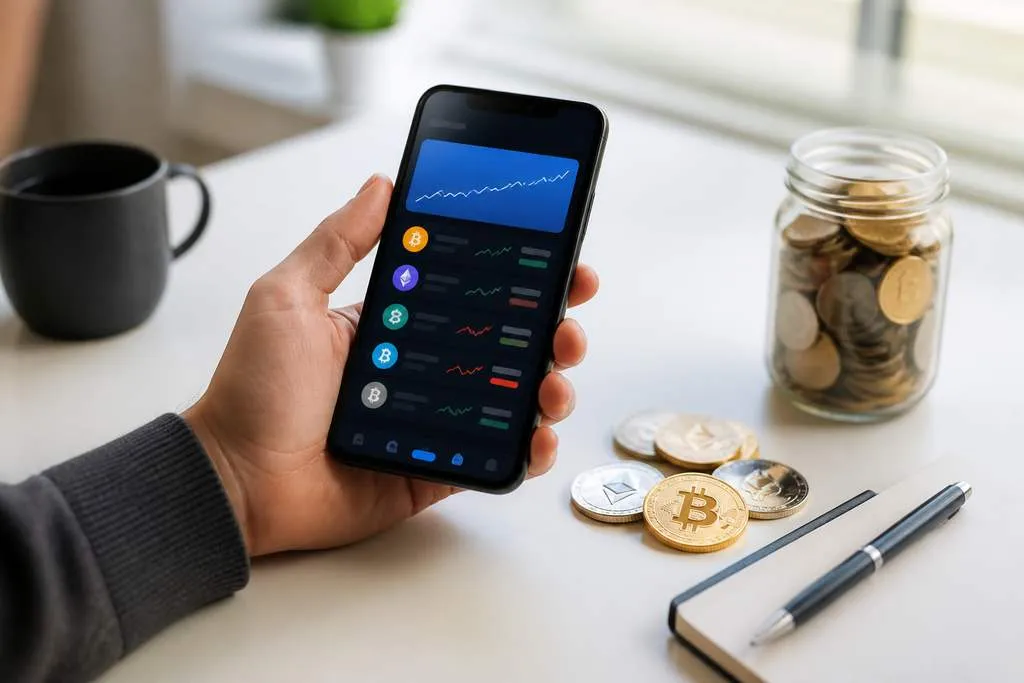

Ask what the Telegram crypto coin is and the honest answer has two parts. Telegram tried to launch its own token, the Gram, in 2018 and abandoned it under pressure from American regulators. The coin people mean today is Toncoin (TON), the native asset of The Open Network, a blockchain built from Telegram’s discarded code by independent developers and later adopted by Telegram as the payment rail for its in-app Wallet, its Fragment marketplace and parts of its advertising system.
That history shapes the fee question. Telegram does not set the price of moving Toncoin; the chain’s validator network does, and those costs are fixed in protocol code. What Telegram and its partners control is the service layer wrapped around the coin — swaps, card purchases, Stars conversions — and that service layer is where most avoidable cost hides. Separating the two is the point of this article.
What is the Telegram crypto coin and how Toncoin replaced Gram
In 2018 Telegram ran a private sale that raised roughly $1.7 billion to build the Telegram Open Network and a native token called Gram, designed to sit directly inside the messaging app. The Securities and Exchange Commission sued in October 2019, arguing the sale was an unregistered securities offering. Telegram gave up on the project in 2020, paid an $18.5 million civil penalty and returned the remaining funds to investors.
The network itself survived as an open-source continuation, The Open Network, with Toncoin as its asset. Telegram never issued Toncoin, but it later endorsed the chain, named TON its preferred Web3 infrastructure, embedded the Wallet app, hosted USDT on the network and routed username auctions through Fragment. Because the coin is run by an independent validator community, baseline fees come from the protocol; Telegram’s integrations stack their own charges on top.
Why Toncoin network fees stay low and how they are calculated
TON charges per transaction using fixed protocol parameters: the computation a message needs, its size and the storage it creates. Fees are deterministic, so they do not spike when the network is busy the way auction-based gas markets do; transactions may queue, but the price does not reprice midday. A plain Toncoin transfer costs on the order of thousandths of a TON, which at typical prices lands in the fraction-of-a-cent to few-cent range. Moving a token such as USDT costs noticeably more, because the token’s contract must execute on top of the transfer, though it stays in cent territory.
Two mechanics are worth knowing. First, wallets send transactions with a maximum gas budget and the chain refunds the surplus, so the amount actually charged often comes in below the estimate shown on screen. Second, the fee is always paid in Toncoin, even when the asset being moved is USDT — senders who hold only tokens learn this the hard way, because the transfer fails without TON to cover gas. Receiving costs nothing.
The three fee layers inside Telegram’s built-in Wallet
The Wallet app inside Telegram holds balances for users and also exposes TON Space, a self-custody interface on the same network. Costs split into three layers. Transfers between Wallet users inside Telegram are free to the sender, with the service absorbing the trivial network cost — which is why small person-to-person settlement in a chat costs nothing. Withdrawals to any external address leave the service and pay the standard network fee. Swaps between assets carry a service fee expressed as a percentage of the trade, and card purchases are routed through third-party payment providers whose pricing varies by provider, region and payment method.
The table below lays the routes side by side so the cost driver is visible at a glance.
| Route | What you pay | Where the cost comes from |
|---|---|---|
| Transfer to another Telegram Wallet user | No visible fee | Service covers the small network cost |
| Withdrawal to an external wallet | Network fee in TON | Protocol-set gas for the transaction |
| Swap inside the Wallet | Percentage service fee plus gas | The Wallet’s own pricing schedule |
| Card purchase inside the Wallet | Provider fee and spread | Third-party on-ramp; varies by provider and region |
| Spot purchase on an exchange | Trading fee plus withdrawal fee | The exchange’s fee schedule |
Wallet’s fee terms and its roster of payment providers change over time, so the fee screen shown before confirming is the only figure worth trusting. The structural point holds: the further you move from a simple Wallet-to-Wallet transfer, the more parties take a cut.
What buying Toncoin with a card or on an exchange actually costs
Instant card purchases — inside the Wallet or in any exchange’s one-click buy — bundle a processing fee and a spread into the quoted price. The spread is the gap between the quoted price and the market rate, and on small purchases it is often the single largest cost, bigger than the fee line itself. Card issuers may also code a crypto purchase as a cash advance, with its own interest and charges; that depends entirely on the issuer’s policy.
The exchange route is cheaper but slower: spot trading fees apply to the order, then a withdrawal fee applies to move the Toncoin into self-custody or back into the Wallet. On any meaningful amount the gap between the spread-heavy instant buy and the two-step exchange route is real money, which is why regular buyers usually purchase on an exchange and use Telegram mainly for settlement. For readers who need the backstory first, the Crypto FAQ section carries a dedicated guide to what is the Telegram crypto coin and how the network is run.
Fee points outside the wallet, from Fragment auctions to Telegram Stars
Fragment is Telegram’s marketplace for usernames, anonymous numbers and collectible gifts, priced in Toncoin and settled on TON. Winning a username auction means paying the bid plus network gas; reselling or transferring the item later triggers another on-chain fee. Telegram’s advertising product also settles in Toncoin through Fragment, so ad spend leaves the wallet in TON rather than fiat.
Stars work differently. Users buy Stars with ordinary money, and purchases made inside the app pass through Apple or Google, whose standard cut is 30 percent; Telegram’s own storefront sells Stars at a lower rate partly because it skips that intermediary. Mini-app developers withdraw their Star earnings as Toncoin through Fragment, and the payout arrives net of the withdrawal mechanics on that route. These costs belong to the services, not the coin — a username auction can run to hundreds of TON while the network transfer behind it costs cents.
How to keep the real cost of using Toncoin near the network floor
Practical habits close the gap between the cheap chain and the expensive routes. Keep a small Toncoin balance next to any tokens so gas never blocks a transfer. Settle person-to-person debts with Wallet-to-Wallet transfers, which stay free, and reserve on-chain withdrawals for amounts where the network fee is genuinely negligible. Before any card purchase, compare the Wallet’s quoted price against the spot price on an exchange; the difference is spread plus processing, and on larger sums a spot trade followed by a withdrawal usually wins even after trading fees and the withdrawal charge.
One check matters more than any single number: fee schedules, swap rates and payment providers inside the Wallet change, and Toncoin’s price moves the real value of a fixed network fee. Read the confirmation screen every time rather than trusting last month’s quote. On a chain where the protocol fee is a fraction of a cent, every extra layer of service is a choice, and the cheapest route is the one you verify before signing.