
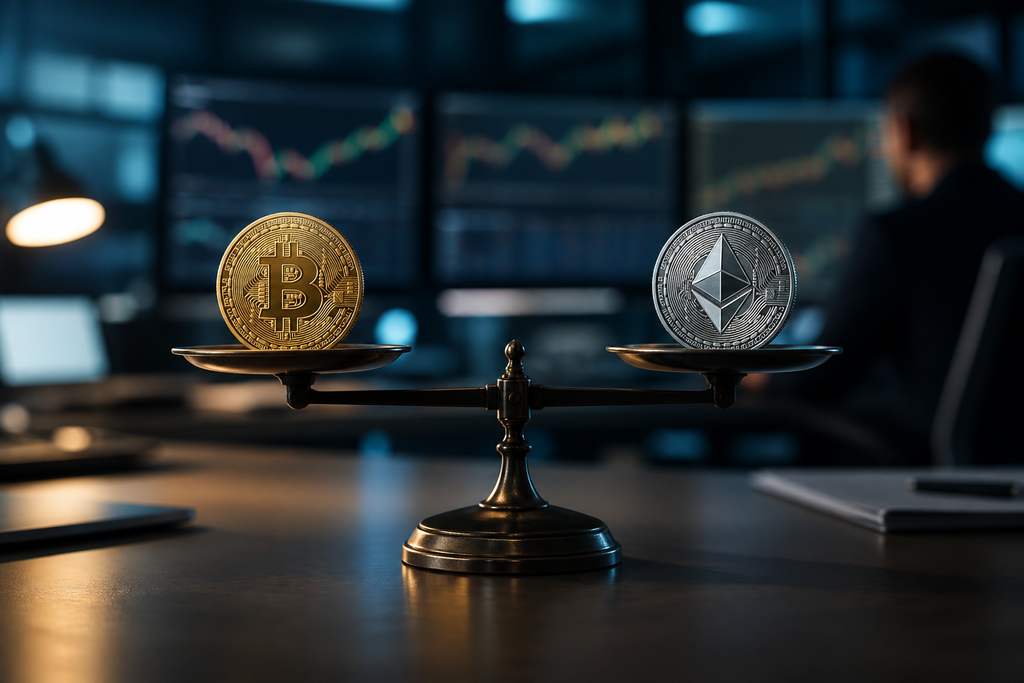
A crypto portfolio is the mix of digital assets, cash balances, and custody choices held across exchanges and wallets. When people ask what is your crypto portfolio, they often mean the coins inside it. The more useful definition includes the cost structure around those holdings: trading spreads, network fees, deposit charges, withdrawal charges, taxes, and the hidden cost of poor execution.
That broader view matters because two portfolios with the same coins can produce very different results after fees. A simple monthly buy plan on a low-fee exchange can outperform a more active strategy that pays repeated trading and transfer costs. The real task is not only choosing assets but understanding where money leaves the portfolio before returns ever show up.
What is your crypto portfolio in practical terms
In practice, a crypto portfolio has three layers. The first is asset allocation: how much sits in bitcoin, ether, stablecoins, or smaller tokens. The second is account structure: which exchange accounts, wallets, and blockchains hold those assets. The third is the cost layer: every fee paid to acquire, move, store, and eventually sell.
That third layer is often missed because fees are split across different screens. An exchange may show a trading fee, while the spread is baked into the quoted price. A wallet may be free to install but still require network fees every time funds move. A bank transfer may be free on one platform and chargeable on another. Looking at the portfolio without those frictions gives an incomplete picture.
A useful portfolio record therefore tracks more than balances. It should include average purchase price, transfer history, custody location, and the reason each asset is held. Once those details are visible, it becomes easier to tell whether a position is genuinely long term or simply expensive to unwind.
The main costs that shape portfolio performance
The first cost is the trading fee. On many exchanges this is charged as a percentage of the order value, and the rate can differ for market orders and limit orders. Market orders usually pay for speed and convenience, while limit orders can reduce cost if they rest on the order book. For someone building a portfolio over time, that difference compounds.
The second cost is the spread, which is the gap between the buy price and the sell price at a given moment. On broker-style apps, the spread can be more important than the advertised fee because it affects every trade. Thinly traded tokens usually have wider spreads than major assets, so a portfolio tilted toward smaller coins may face a higher entry and exit cost even before volatility is considered.
Third comes the network fee. This is paid to the blockchain, not usually to the exchange, when assets are withdrawn or sent from one wallet to another. The amount depends on the chain and current network demand. A portfolio spread across several chains may look diversified, but each rebalance or transfer can create another layer of cost.
There are also funding and cash-out charges. Some platforms offer free bank deposits but charge for card purchases. Some support cheap withdrawals in local currency, while others route users through third-party payment processors. The question what is your crypto portfolio becomes more useful when it includes how cash enters and leaves, because that is where many avoidable charges appear.
How buying methods change the total price paid
The same asset can cost different amounts depending on how it is bought. The table below shows the main tradeoff: speed and simplicity usually cost more than planning and patience.
| Method | Typical cost pattern | Best use |
|---|---|---|
| Bank transfer on exchange | Lower funding cost, trading fee applies | Planned purchases |
| Debit or credit card | Higher processing cost, possible issuer charges | Urgent small buys |
| Broker app instant buy | Spread-heavy pricing, simple interface | Convenience |
| Recurring buy plan | Small repeated fees, disciplined averaging | Long-term accumulation |
Bank transfer purchases are usually the benchmark for lower cost because they avoid card processing and often give access to the full exchange order book. Card purchases can be fast, but they may trigger cash-advance treatment or extra issuer fees depending on the card and region. Broker apps remove complexity, yet that convenience can be embedded in wider spreads rather than a clearly itemized commission.
Recurring buy plans deserve special attention. They can be efficient for people who want steady exposure without constant decision-making, but the fee structure varies. Some plans place standard market buys at regular intervals, while others route through a simplified broker interface. The difference between those systems may seem small per purchase and still add up over a year.
Custody decisions add their own fee logic
Where assets are stored changes both direct costs and practical risk. Leaving coins on an exchange may avoid immediate withdrawal fees and make future selling easier. Moving them to a self-custody wallet adds a network fee now, but can reduce platform risk and give access to on-chain services. The right choice depends on position size, holding period, and whether the asset is likely to be traded again soon.
Hardware wallets add another cost: the device itself. That upfront expense may be sensible for larger balances because it is paid once and can improve key security. For small holdings, the device can represent a large percentage of the portfolio. Software wallets are cheaper to start with, but every on-chain move still incurs network fees, and mistakes in seed phrase handling can be costly in ways no fee schedule captures.
Some investors create a split model: trading balances remain on an exchange while long-term holdings are moved to cold storage in fewer, larger withdrawals. This can reduce repeated transfer costs. It also creates cleaner accounting because active trading and long-term storage are separated instead of mixed across many wallets.
Rebalancing and diversification can become expensive
Diversification is often treated as automatically prudent, but in crypto it can become fee-heavy if it leads to frequent switching between assets or chains. Every rebalance may involve selling one token, buying another, and possibly moving funds between networks. That means multiple spreads, multiple trading fees, and sometimes taxable events.
A concentrated portfolio in a few liquid assets may carry more market risk than a broad basket, yet it can be cheaper to manage. The cost question is not whether diversification is good or bad in the abstract. It is whether the expected benefit from holding more positions is greater than the friction of maintaining them.
Small portfolios are especially vulnerable to fee drag. A fixed withdrawal charge or a single expensive on-chain transfer can consume a noticeable share of capital. That is why many low-balance investors use fewer platforms, larger purchase intervals, and less frequent rebalancing. The portfolio may look simpler, but simplicity is often what keeps costs proportionate.
Taxes and recordkeeping are part of the portfolio cost
Taxes are not a platform fee, but they are a real portfolio cost and should be treated that way. Selling crypto for cash, trading one token for another, and in some jurisdictions spending crypto can all create taxable events. A strategy that churns through many trades may generate a larger compliance burden even if the gross return looks attractive.
Recordkeeping has a direct financial effect because poor records can make it harder to calculate cost basis accurately. That can lead to overpaying tax, underreporting, or paying for specialist cleanup later. Exchanges do not always provide a complete picture when funds move between platforms or wallets, so the investor often has to maintain an independent transaction log.
Fee records matter here too. Trading fees and transfer costs may affect basis or proceeds depending on local rules. Even where the treatment differs by jurisdiction, the operational lesson is the same: save statements, export trade history, and note wallet transfers while they are still easy to identify.
A practical way to build a lower-cost crypto portfolio
Start with a short list of assets that can be explained in one sentence each. Buy them through a method with transparent pricing, preferably one that separates the trading fee from the quoted market price. Avoid moving funds between platforms unless there is a clear benefit in custody, liquidity, or access. If self-custody is the goal, consolidate transfers rather than sending many small withdrawals.
Then review the portfolio through a cost lens once a month. Check how much went to trading fees, how much to spreads, how much to network transfers, and whether any holding is too small to justify another paid move. A concrete rule works well: if a change does not improve security, liquidity, or allocation enough to cover its own friction, leave the portfolio alone.

