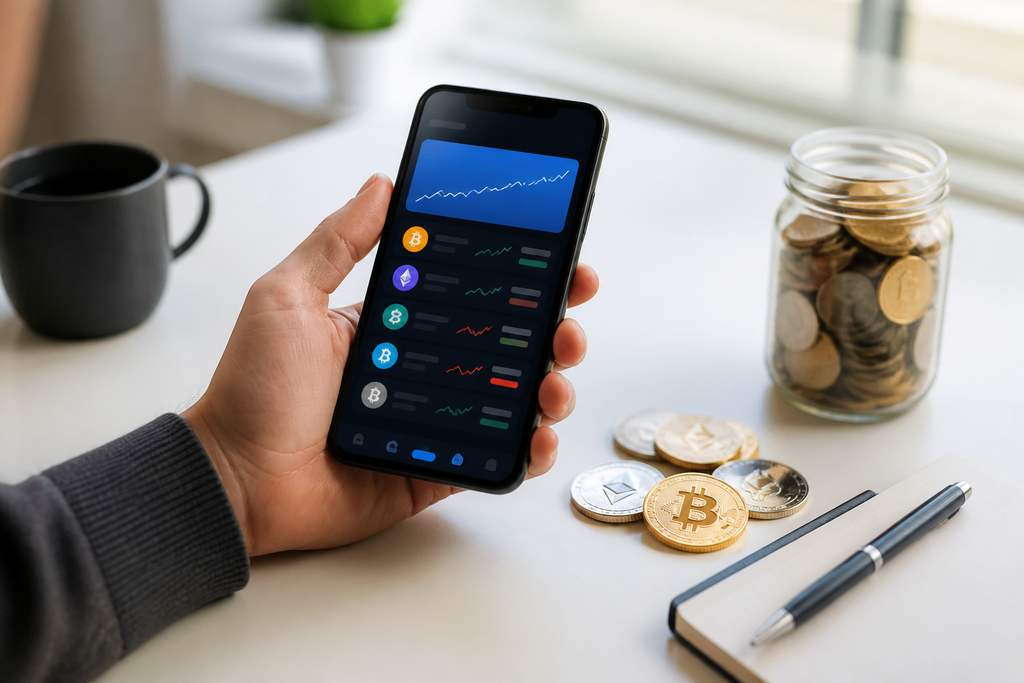

ZRX is the token associated with 0x, a protocol built to let developers create decentralized exchange functions on public blockchains. The token has had two main roles over time: governance within the 0x ecosystem and, in earlier designs, participation in protocol fee mechanics. For most buyers and traders today, the practical question is less about the codebase alone and more about what exposure to ZRX actually represents compared with other ways to interact with decentralized trading.
That matters because ZRX sits in a narrower category than broad payment coins or smart contract base assets. It is tied to infrastructure for token exchange rather than serving as a chain’s native gas token. Anyone assessing it for investment or use needs to separate three things: the 0x protocol, the ZRX token, and the different venues and custody methods through which that token can be bought, held, or traded.
What is ZRX crypto in the context of the 0x protocol
0x was designed as open infrastructure for exchanging tokenized assets without relying on a single centralized order book operator. Instead of one closed platform controlling execution, 0x provides smart contracts and related tooling that other applications can integrate. That makes the protocol more like a shared trading layer than a consumer-facing exchange in its own right.
ZRX is the protocol’s token. In simple terms, holding ZRX has historically been connected to governance and ecosystem participation rather than to paying normal blockchain transaction fees. Gas on Ethereum is paid in ETH, not in ZRX. That distinction is central, because many buyers assume every crypto asset linked to a protocol powers all activity on that network. ZRX does not work that way.
The token’s value case therefore depends on whether the market believes the 0x ecosystem will retain relevance in decentralized trading infrastructure, aggregation, and governance. That is a different thesis from buying ETH for network usage or buying BTC as a monetary asset.
How ZRX differs from coins used for payments or gas
ZRX is easiest to understand by contrast. Bitcoin is primarily discussed as a scarce digital asset and payment network. Ether is the native asset used to pay for computation on Ethereum. Stablecoins aim to track fiat value for settlement and trading. ZRX, by comparison, is an application-layer token tied to one protocol stack.
That narrower role creates a different risk profile. If decentralized trading volumes grow, that does not automatically mean every exchange-related token benefits equally. A protocol token must maintain developer use, governance relevance, and some durable reason for market participants to care about the token itself instead of just the protocol’s software.
For readers trying to sort out basic definitions before comparing assets, the question what is zrx crypto usually leads straight to this distinction between a protocol token and a chain’s native asset.
Main ways to get exposure to ZRX
There are several practical options for gaining exposure to ZRX, and the right choice depends on whether the priority is convenience, control, or active trading. The important takeaway from the comparison below is that the asset may be the same, but the risks and frictions change significantly with the access method.
| Option | Best for | Main tradeoff |
|---|---|---|
| Centralized exchange purchase | Simple access | Custody and platform risk |
| DEX swap to self-custody wallet | Direct control | Gas costs and wallet complexity |
| Broker app with limited crypto features | Basic exposure | Fewer transfer and order tools |
| Hardware wallet storage after purchase | Long-term holding | Manual setup and key management |
The most common route is a centralized exchange. That usually offers the cleanest user interface, bank funding options, and deeper order tools. The tradeoff is that the platform may hold the coins unless the buyer withdraws them to a private wallet. This introduces exchange solvency, withdrawal policy, and account restriction risk.
A decentralized exchange route gives more direct control because the holder can swap into ZRX from a self-custody wallet. But that requires comfort with wallet setup, token approvals, slippage, and network fees. It also puts all responsibility for seed phrase security on the holder. There is no support desk that can reverse an error on-chain.
Some broker-style apps offer crypto exposure in a simpler wrapper, but they may limit transfers, order types, or wallet functionality. For someone who wants only price exposure, that may be acceptable. For someone who wants to move ZRX into self-custody or use it across the broader crypto ecosystem, those restrictions matter.
Where the token fits in a portfolio decision
ZRX usually belongs in the higher-risk, thesis-driven part of a crypto portfolio rather than in a core allocation. The reason is concentration. Its future depends less on general crypto adoption than on the continued relevance of one protocol family and the market’s view of that token’s role inside it.
That does not make it inherently weak. Specialized infrastructure tokens can benefit when a protocol solves a real market problem and remains integrated across multiple applications. But the evaluation standard should be stricter than for assets with broader monetary or network utility. A buyer should be able to explain why 0x specifically deserves attention, not just why decentralized trading may grow.
Liquidity also matters. A token can be listed on major venues and still behave more sharply than larger-cap assets during market stress. That can affect entry price, exit price, and the practical ability to rebalance without taking a wider spread.
Key risks behind buying and holding ZRX
The first risk is protocol relevance. Crypto infrastructure changes quickly, and trading activity can migrate toward competing systems, aggregators, or new execution models. If developers and users move elsewhere, token demand can weaken even if decentralized finance as a whole remains active.
The second risk is token utility drift. Some protocol tokens launch with one economic design and later evolve as governance, incentives, and product direction change. A buyer should verify the token’s current function rather than relying on old summaries from earlier market cycles.
The third risk is custody and operational error. ZRX is commonly held as a token on supported networks, so mistakes around network selection, wallet compatibility, or contract verification can cause losses. On a centralized exchange, the operational risk shifts toward account security and platform dependence; in self-custody, it shifts toward private key management.
There is also market structure risk. Smaller or more specialized assets can react harder to sentiment changes, listing news, or sector rotation. That tends to matter most for investors who assume all exchange-related tokens move together. They do not.
A practical way to approach ZRX before buying
The best concrete next step is to decide which decision is actually being made: whether 0x is a compelling protocol thesis, whether ZRX is the right way to express that thesis, and which access route fits the intended holding period. Those are separate decisions and should be treated that way.
If the goal is a small speculative position, a regulated centralized exchange with immediate withdrawal support is often the cleanest starting point. If the goal is long-term control of the asset, buying on a liquid venue and then moving ZRX to a hardware wallet is usually the more disciplined setup. If the goal is active on-chain participation, then self-custody from the start may make sense, provided wallet and network risks are well understood.
The concrete takeaway is simple: buy ZRX only after matching the token’s narrow protocol thesis with the right access method. A weak thesis with perfect custody is still a weak investment, and a solid thesis held through the wrong platform can create avoidable risk.