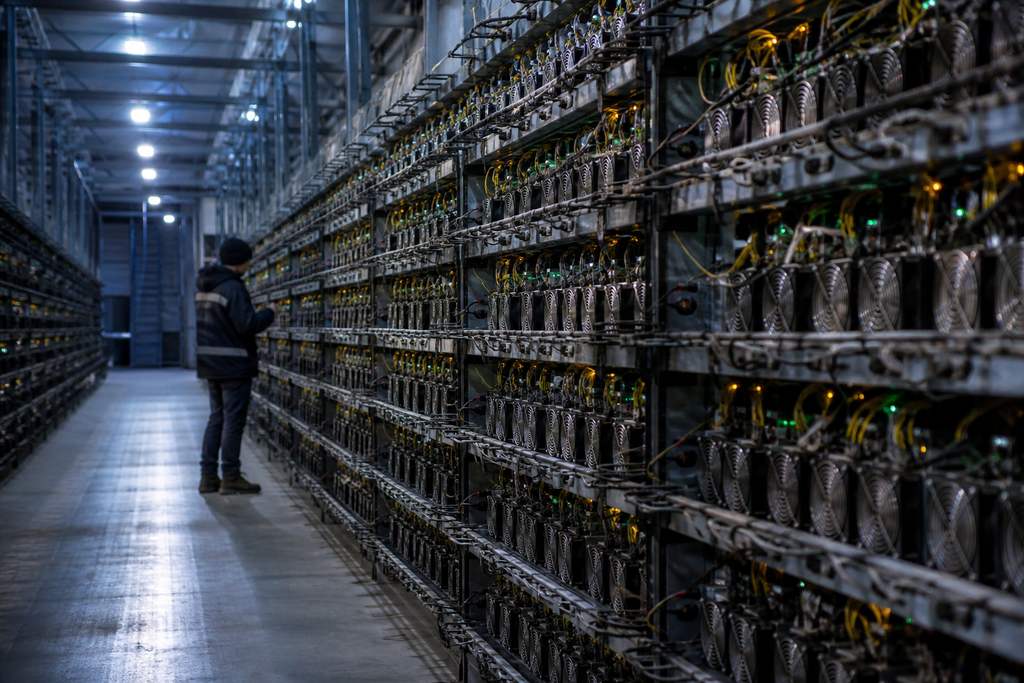
Many people picture bitcoin mining as workers digging up hidden coins from the internet. That image causes most of the confusion. Mining is closer to an open bookkeeping contest. A global network needs someone to collect new transactions, package them into blocks, and attach those blocks to a shared history in a way that is expensive to fake. The reward in new bitcoin exists to pay for that work and to give strangers a reason to compete honestly.
That framing clears up several common questions at once. When people ask why do you mine bitcoin, they often mean one of two things: why does the system require mining at all, and why would any participant choose to do it? The first is about network design. The second is about incentives, hardware, energy, and risk. Both matter, and both are often explained badly.
Why do you mine bitcoin instead of just updating a database
A normal database has an owner. A bank, card network, or cloud provider decides which entries are valid and can reverse mistakes or fraud. Bitcoin was built to work without that central editor. If anyone can join the network, then the network needs a rule for deciding which transaction history counts as the real one.
Mining supplies that rule through proof of work. Miners gather valid transactions into a candidate block and repeatedly run computations to find a value that meets the network’s difficulty target. Finding that valid block requires substantial electricity and specialized hardware, but checking it is easy for every other node. That asymmetry matters. It makes rewriting history costly while keeping verification cheap.
This is the practical answer to why do you have to mine bitcoin. Without mining, there is no built-in way for a decentralized set of nodes to agree on a single transaction order when competing versions appear. Someone would have to take over the role of final referee, which would change the system’s core design.
What mining actually does inside the Bitcoin network
Mining has three jobs. First, it orders transactions. If two transactions try to spend the same coins, only one can make it into the accepted chain. The block chosen by the network settles that conflict. Second, it timestamps blocks in a rough sequence. Blocks do not produce a perfect clock, but they create an ordered history that is hard to alter later. Third, it distributes new bitcoin according to the protocol’s issuance schedule.
That third job gets the attention because it is visible: miners receive a block reward and transaction fees. But the reward is not the main purpose of mining; it is the payment mechanism that keeps the first two jobs running. This addresses another repeated confusion behind questions like why do you have to mine bitcoins. Coins are not being extracted because they are physically hidden somewhere. New issuance is how the system bootstraps and maintains security while rewarding the parties who commit resources to secure the ledger.
Every full node still verifies the rules independently. A miner cannot invent coins outside the protocol or include invalid transactions and expect the network to accept them. Mining gives a block the chance to be added; nodes still decide whether that block follows the rules.
The myth that miners create value by magic
One persistent myth says miners “make bitcoin valuable” simply by spending electricity. That is incomplete. Energy use alone does not create value. What mining creates is a costly barrier against rewriting the ledger. The value comes from users wanting a payment and savings system with predictable rules, global transferability, and resistance to unilateral control. Mining supports those properties by making attacks expensive.
Another myth says mining is pointless because computers could just take turns adding blocks. In a closed system with trusted participants, that can work. In an open network where anyone can join under many identities, simple rotation is easy to game. A malicious actor could create many fake participants and dominate the schedule. Proof of work ties influence to real-world cost rather than to usernames.
That is also the clearest answer to why do you need to mine bitcoin. The network needs some scarce resource to limit who can rewrite or dominate transaction history. Bitcoin uses computational work backed by energy and hardware. Other systems use different methods, but Bitcoin’s choice is deliberate: it favors a process that any miner can verify and any node can audit.
Why do you mine bitcoins as a participant, not just as a system rule
From the participant side, mining is a business activity. A miner buys hardware, finds access to power, installs cooling and electrical infrastructure, connects to the network, and tries to earn enough bitcoin from block rewards and fees to cover operating costs and hardware depreciation. The protocol does not guarantee profit. It only defines the reward if a miner finds a valid block that the network accepts.
So why do you mine bitcoins if the economics are uncertain? Different operators have different reasons. Some pursue direct revenue. Some have access to stranded or flexible power and use mining to monetize energy that would otherwise be curtailed. Some want exposure to bitcoin through operations rather than buying on the market. A few mine for strategic reasons, such as supporting the network or learning the infrastructure.
Most individual miners do not mine alone because the payout is highly uneven. They usually join mining pools, which combine hash power and share rewards according to contributed work. Pools smooth income, but they also introduce a coordination point. The pool typically builds the candidate block template, so miners must pay attention to pool reputation, reliability, and concentration risk.
Why do you have to mine for bitcoin if transactions already have fees
Fees help, but fees alone do not solve startup security. Early in Bitcoin’s life, transaction volume was low, so fees by themselves would not have been enough to attract sufficient mining. The block subsidy provided a built-in incentive while the network grew. Over time, as new issuance declines by design, fees become more important to miner revenue.
This helps answer why do you have to mine for bitcoin instead of funding security some other way. The protocol wanted a native method that did not depend on subscriptions, taxation, or a company treasury. Mining converts network security into an open market activity. Anyone able to acquire hardware and power can compete under the same consensus rules.
There is still a tradeoff. Mining tends to favor operators with efficient equipment, low energy costs, and strong logistics. That can create industrial concentration even though the protocol itself is open. The network’s health depends partly on whether hash power remains distributed across many firms, regions, and pool arrangements.
The real costs and limits people ignore about bitcoin mining
The easiest mistake is to imagine mining as free money generated by a laptop. Competitive bitcoin mining uses specialized ASIC machines designed for one task: computing the SHA-256 hashes used by Bitcoin’s proof of work. General-purpose computers are not competitive against that hardware. Beyond the machines, the hard part is operations: stable power, heat management, dust control, repair cycles, internet connectivity, noise, and local regulation.
Energy cost is only one line item. Hardware ages, difficulty adjusts as total network hash rate changes, and mining revenue is inherently variable. If more miners join or more efficient machines come online, each unit of hash power earns a smaller share of the total rewards. That is why articles that imply a simple plug-in-and-profit model mislead readers.
Environmental arguments are also often flattened into slogans. The useful question is not just whether mining uses electricity, because it clearly does. The harder questions are where that power comes from, whether miners can absorb surplus generation, whether they raise local grid stress, and how mobile demand interacts with power markets. Those answers vary by site and operator, so broad claims in either direction usually hide the real details.
The concrete takeaway: learn Bitcoin by separating security from reward
If one idea should stick, it is this: bitcoin is mined so a decentralized network can agree on one valid transaction history without trusting a central bookkeeper. The coin reward is the incentive layer wrapped around that security process. Once that distinction is clear, the common questions line up. Why do you mine bitcoin? To make block creation costly enough that the ledger is hard to fake. Why do you have to mine bitcoin? Because the system needs a way to choose and defend a shared history. Why would someone mine? Because the protocol pays miners who successfully provide that service, though the costs and competition are real.
A practical next step is to look at any mining claim through two filters. First, ask what role mining serves in consensus and ledger security. Second, ask what the operator’s actual cost structure looks like: hardware, power, cooling, downtime, and pool dependence. That simple split cuts through most myths faster than price talk or dramatic headlines.